 Changlaishun
Changlaishun
Changlaishun
Choosing the 2026 Best Tractor Snow Plow for Snow Removal requires more than comparing blade width or purchase price. A reliable Tractor Snow Plow must match the tractor’s horsepower, hydraulic capacity, tire grip, and working environment. A 72-inch blade may clear a rural driveway quickly, yet struggle on wet, packed snow. A smaller blade can feel slower, but offer better control around garage doors, fences, and uneven gravel.
John Allin, a recognized snow-and-ice management consultant, has said, “The best snow plan is the one you can execute safely, repeatedly, and before the storm peaks.” That principle applies directly to tractor-mounted plows. Operators should examine cutting-edge design, moldboard strength, trip protection, attachment speed, and visibility from the seat. They should also consider whether the plow handles forward pushing, backdragging, and angled passes without stressing the tractor.
Real conditions reveal the truth.
This guide compares leading Tractor Snow Plow options for farms, private roads, commercial lots, and large residential properties. It considers performance in light powder, heavy snow, icy buildup, and mixed gravel surfaces. Maintenance demands, storage space, dealer support, and replacement-part availability also matter. A plow that looks impressive online may become frustrating after one storm if its hydraulics respond slowly or its shoes wear quickly.
No ranking is perfect. Local snowfall, terrain, and operator experience can change the result. Still, careful testing and practical specifications can narrow the choice. The best model should clear snow efficiently, protect the tractor, and remain dependable when temperatures fall below zero.
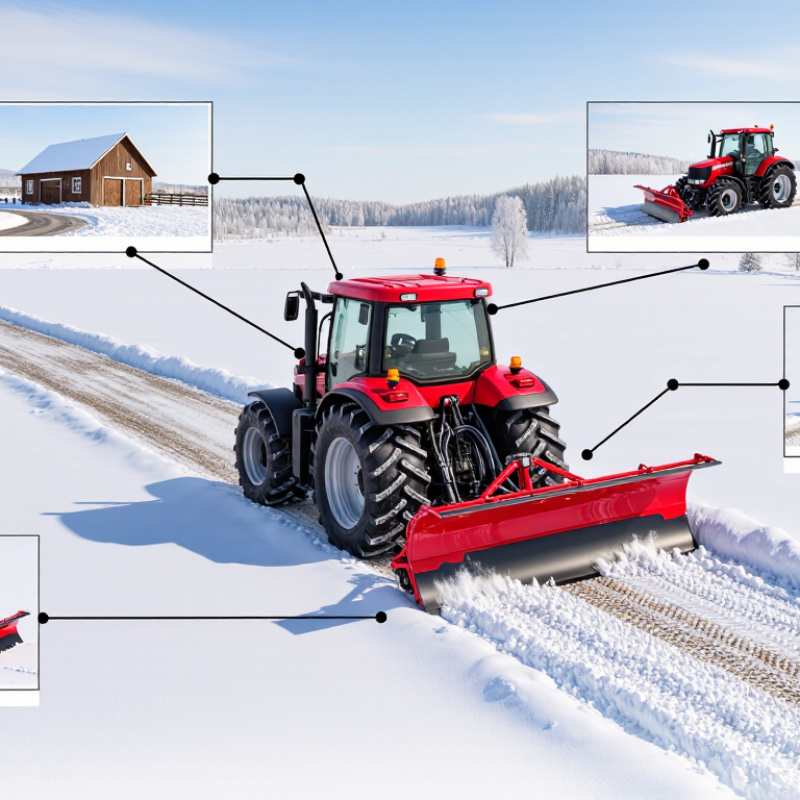
What Is a Tractor Snow Plow and How Does It Work?
A tractor snow plow is a steel blade attached to the tractor’s front, rear, or three-point hitch. It pushes snow across driveways, farm lanes, and work yards. Most blades angle left or right, allowing snow to roll away from the cleared path. Hydraulic cylinders control lifting and angling from the operator’s seat. Some tractors use a snow blower instead, which gathers snow and throws it through a rotating chute.
In practical use, traction matters as much as blade width. Rear ballast, suitable tires, and steady speed help the tractor stay balanced. I have found that wet snow often needs several lighter passes. Deep, frozen ridges can overload the blade or strain the hitch. The machine usually feels strong, but it is not unstoppable. I still misjudge snow depth sometimes, especially after wind creates hidden drifts. Slow movement gives better control and reduces damage to gravel, curbs, and drainage edges.
Tips: Check hydraulic lines, pins, cutting edges, and lights before each job. Mark hidden obstacles before snowfall. Keep the blade slightly raised on uneven gravel. Clear snow away from buildings before piles become too heavy. Wear warm, visible clothing, and stop immediately if visibility drops. The best setup depends on tractor weight, surface conditions, snowfall depth, and available storage space.
| Plow Type | Typical Working Width | Typical Tractor Size | Main Operating Method | Best Application | Key Advantages | Important Limitations |
|---|---|---|---|---|---|---|
| Front-Mounted Straight Blade | 1.5–2.4 m (5–8 ft) | Compact or utility tractor, approximately 15–50 hp | Front hitch, loader arms, or dedicated subframe | Driveways, small parking areas, farm lanes, and sidewalks | Simple design, good visibility, and effective forward pushing | Less efficient for moving large snow volumes than angled or winged designs |
| Front-Mounted V-Plow | 1.8–2.7 m (6–9 ft) | Utility tractor, approximately 25–70 hp | Hydraulic cylinders adjust the blade into V, scoop, or straight positions | Variable snow conditions, long drives, and areas requiring directional control | Breaks through packed snow and offers several clearing configurations | Higher purchase cost, greater hydraulic complexity, and more maintenance points |
| Rear-Mounted Back Blade | 1.5–2.4 m (5–8 ft) | Compact or utility tractor, approximately 20–60 hp | Three-point hitch with mechanical or hydraulic angle adjustment | Light to moderate snowfall on open drives and rural lanes | Lower equipment cost and useful for grading during other seasons | Reduced rearward visibility and less convenient operation in tight areas |
| Loader-Mounted Snow Blade | 1.8–3.0 m (6–10 ft) | Utility or agricultural tractor, approximately 40–100 hp | Quick-attach loader coupler and hydraulic loader controls | Large yards, commercial lots, and deeper or heavier snow | Strong pushing force, quick attachment, and compatibility with loader work | Can reduce front-axle maneuverability and may require additional ballast |
| Rear Pull-Type Scraper Blade | 1.8–2.7 m (6–9 ft) | Compact or utility tractor, approximately 25–70 hp | Three-point hitch pulls snow away from the tractor | Long, open surfaces where a clean scraping pass is practical | Efficient scraping and relatively low hydraulic demand | Less suitable for confined spaces and areas requiring frequent repositioning |
Note: Capacity and suitability vary with snow density, depth, terrain, tractor weight, tire configuration, hitch design, and operating conditions. Always follow the tractor and attachment manufacturer’s rated limits.
It is a steel blade mounted on a tractor’s front, rear, or three-point hitch. The blade pushes snow aside.
Hydraulic cylinders lift and angle the blade. Angling lets snow roll away from the cleared path.
A plow pushes snow across driveways and farm lanes. A blower collects snow and throws it through a rotating chute.
The blade should extend slightly beyond the tractor’s tires. Excessive width may reduce steering control.
Suitable tires, rear ballast, and steady speed improve balance. Wet snow may require several lighter passes.
Keep the blade slightly raised on uneven gravel. Move slowly near curbs, ditches, and hidden obstacles.
Check tire pressure, hydraulic lines, mounting pins, cutting edges, shear bolts, and warning lights. Look for small leaks.
Keep bystanders far from the blade. Wear a seat belt inside the protective structure.
Stop immediately if falling snow or darkness limits visibility. Approved lighting helps, but it cannot fix every condition.
Rushed inspections are tempting during heavy snowfall. I sometimes underestimate hidden drifts, and that judgment needs correction.
Choosing the best Tractor Snow Plow in 2026 starts with understanding how it attaches to a tractor and moves snow through a reinforced blade, hydraulic lift, and adjustable angle system. The right model should match your tractor’s power, front-end capacity, mounting structure, and typical snowfall conditions. Important features include durable construction, adjustable blade positions, reliable hydraulics, replaceable cutting edges, skid shoes, and controls that allow smooth operation from the driver’s seat.
Different plow types suit different tasks, from straight blades for simple driveway clearing to angled, V-shaped, or multi-position designs for deep, packed, or uneven snow. Consider the area size, surface type, snow depth, storage space, and available attachments before making a decision. Safe operation requires reduced speed, clear visibility, proper ballast, and awareness of people, obstacles, and changing terrain. Regular inspection, cleaning, lubrication, and timely replacement of worn parts will help maintain performance and extend the working life of the Tractor Snow Plow.
