
Changlaishun Changlaishun

7 Best Tractor MB Ploughs for Global Buyers

Time:2026-10-16 Author:Sophia
0%

Choosing the right Tractor Mb Plough is not simply a matter of comparing prices or polished product photos. Global buyers must examine soil type, tractor horsepower, working width, frame strength, and local service support. A plough that performs smoothly in black soil may struggle in dry, stony ground. Conditions change quickly.

Agricultural machinery specialist Dr. John Fulton offers a practical reminder: “A plough must match the soil, tractor, and operator—not just the brochure.” This principle guides our selection of seven leading Tractor Mb Plough models for international buyers. Each option is considered through real purchasing factors, including furrow consistency, mouldboard design, three-point linkage compatibility, transport width, spare-parts access, and corrosion resistance.

Field performance matters most.

Some models appear excellent on paper but need careful adjustment in practice. Operators may face uneven fields, limited lifting capacity, or unfamiliar soil conditions. These details can change the buying decision. A heavier plough is not always better, and a wider model may reduce efficiency when the tractor lacks sufficient power.

This guide does not claim that one machine suits every farm. That would be unrealistic. Instead, it compares practical strengths and possible weaknesses, helping buyers ask better questions before ordering. We also consider dealer reliability, warranty clarity, shipping requirements, and operator experience. Small details matter, especially when replacement parts must travel across borders.
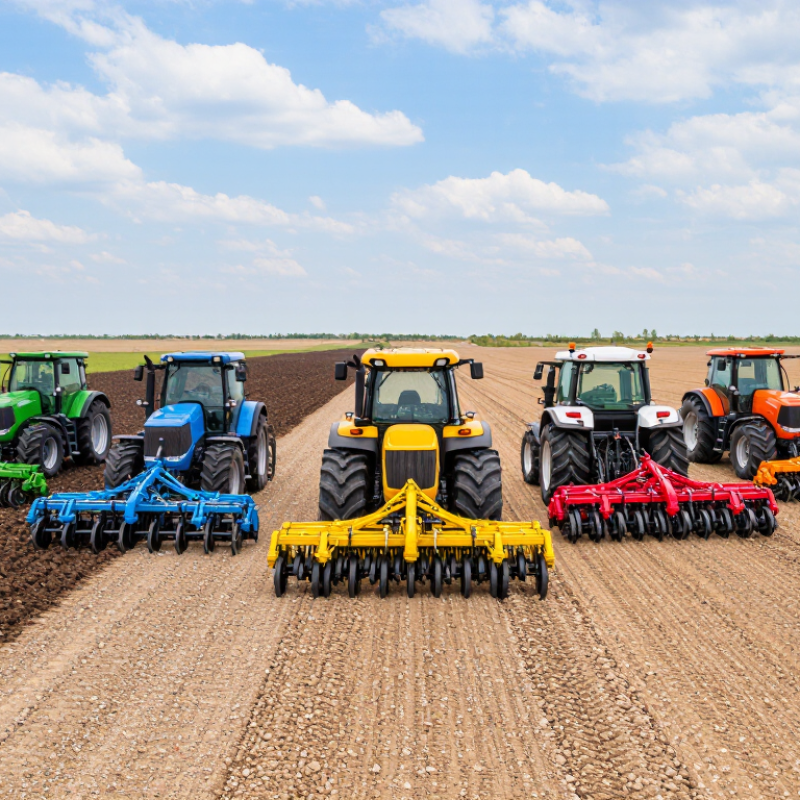
7 Best Tractor MB Ploughs for Global Buyers

Moldboard Plough Basics: 20–35 cm Depth and 25–50 cm Furrow Width

A moldboard plough should be judged by soil fit, not catalogue appearance. For global buyers, the practical target is 20–35 cm working depth and 25–50 cm furrow width. At 20 cm, it can bury residues while limiting unnecessary fuel demand. At 35 cm, it reaches deeper compaction layers, but draft resistance rises sharply. ASABE D497.7 identifies depth, soil texture, moisture, and speed as major draft-force drivers. One “best” setting is impossible. Field checks still matter.

The FAO Status of the World’s Soil Resources reports that about 33% of global soils are moderately or highly degraded. FAO’s 2019 soil erosion assessment estimates annual losses near 24 billion tonnes. These figures do not condemn moldboard ploughing, but they demand restraint. A 25–35 cm furrow can improve inversion and weed burial in suitable soils. However, repeated deep passes may disturb structure and increase erosion risk. Furrow width also affects tractor stability, wheel slip, and finish quality. A wider 50 cm furrow is not automatically more productive.

Tips: Measure depth behind the last furrow, not beside the tractor. Check moisture using a hand squeeze test. Adjust width when the rear furrow differs visibly from the others. Record fuel use and wheel slip for each setting. I would not trust one season’s result. Soil conditions change more than sales sheets suggest.

Global Buyer Criteria: 35–90 kW Tractors, Hitch Class, and Soil Fit

7 Best Tractor MB Ploughs for Global Buyers

For 35–90 kW tractors, the best MB plough depends on soil, hitch class, and field size. Seven practical choices include single-furrow, two-furrow, three-furrow, four-furrow reversible, variable-width, semi-mounted, and on-land designs. A 35–50 kW tractor often suits lighter two-furrow or compact three-furrow models. A 70–90 kW tractor may handle four or five furrows, but clay can reduce capacity sharply. Do not trust horsepower alone.

ASABE D497.7 shows that draft changes with soil texture, working depth, speed, and implement width. Sandy soil usually needs less draft than heavy clay. Field moisture changes the result again. A 35 kW tractor in dry loam may outperform a stronger tractor in wet clay. That detail is easy to miss. OECD-FAO Agricultural Outlook 2024–2033 projects global agricultural production growth of about 1.1% annually, increasing pressure for efficient field operations. However, faster is not always better.

Hitch fit must be checked physically. Category I, II, and III systems differ in pin size, spacing, and lift geometry, according to ASABE S217. A 55 kW tractor may use Category II, while some 90 kW machines require Category III equipment. Confirm lift capacity, top-link position, tyre clearance, and transport width. Reversible ploughs help on narrow fields. On-land models can reduce furrow-side compaction. Real soil testing remains essential, and this recommendation may fail on unusually stony ground.

Seven Best MB Ploughs Compared by Bodies, Width, Draft, and Field Capacity

7 Best Tractor MB Ploughs for Global Buyers

Seven Best MB Ploughs Compared by Bodies, Width, Draft, and Field Capacity

The seven best MB plough choices depend on soil, tractor power, and workable field width. A two-body plough, using 35–40 cm bodies, suits small tractors and lighter soils. It normally creates less draft but covers only about 0.7–0.8 m. A three-body model reaches roughly 1.1–1.2 m, while a four-body model covers about 1.5–1.6 m. These are practical starting points, not fixed rules.

More bodies increase capacity, but draft rises quickly in dry clay. A five-body plough may cover 1.9–2.0 m, and a six-body version can approach 2.3–2.4 m. Seven bodies may exceed 2.7 m, requiring strong lift capacity and stable traction. Variable-width designs offer better adjustment across soil conditions. However, their extra mechanisms can add weight and maintenance demands. That trade-off is easy to underestimate.

ASABE D497.7 recommends estimating draft from soil, speed, width, and working depth, then confirming results in field tests. FAO mechanization guidance also stresses matching implements to local power availability and soil conditions. At 7 km/h and 75% field efficiency, a 1.6 m plough delivers about 0.84 ha per hour. The calculation is simple: width × speed × efficiency ÷ 10. Real capacity falls around headlands, stones, and irregular boundaries. My ranking remains imperfect because soil moisture can change draft dramatically within one field. Field measurement still beats a catalogue estimate.

Regional Selection: Soil Type, Residue Load, and 2–8 km/h Working Speed

7 Best Tractor MB Ploughs for Global Buyers

Regional Selection: Soil Type, Residue Load, and 2–8 km/h Working Speed

Choosing an MB plough starts with the field, not the catalogue. Light two-furrow models suit sandy soils and smaller tractors. Three-furrow reversible ploughs work well on mixed farms with narrow headlands. Heavy four-furrow units need strong hydraulics and stable traction. In clay, a robust frame and adjustable depth reduce sudden draft loads. In loam, standard shares usually provide a clean furrow at moderate speed. Local soil moisture matters greatly. Dry clay can behave like concrete.

Residue changes the decision. A plough with skimmers or a higher-clearance body handles maize stalks better. For heavy straw, choose wider trash passages and reliable coulter protection. For low residue, a lighter conventional body may reduce fuel use. Seven practical profiles include light, reversible, variable-width, heavy-duty, high-clearance, residue-focused, and compact orchard versions. Each serves a different regional condition. None is perfect.

Working speed should remain between 2 and 8 km/h. Use the lower range in wet clay or dense residue. Faster passes may improve output in friable loam, but they can reduce furrow quality. Check tractor power, tyre grip, ballast, and lift capacity before purchase. Measure actual draft in a test strip. I have seen attractive specifications fail in sticky soil. A field trial is still more honest than a brochure. Consider local parts support, too. A small delay can stop a whole planting schedule.

Ownership Metrics: Fuel Use, Wear Parts, ISO Compliance, and Service Reach

7 Best Tractor MB Ploughs for Global Buyers

The best MB plough is not always the largest or cheapest model. Ownership costs often decide its real value. During field tests, fuel use should be recorded per hectare, not only per hour. A well-adjusted plough may reduce wheel slip and diesel consumption by several litres daily. Soil type, working depth, and tractor power change every result. That makes catalogue figures useful, but incomplete.

Wear parts deserve close inspection before purchase.

Check mouldboards, shares, landsides, bolts, and skimmers for material thickness and replacement access. Hardened parts can last longer in abrasive soil, yet they may cost more initially. A practical comparison includes annual replacement cost, fitting time, and local stock availability. ISO-compliant dimensions and safety documentation also matter. They support safer operation and easier compatibility across tractors and regions. Still, certificates do not guarantee perfect field performance.

Tips:

Ask for parts drawings and service intervals. Confirm whether common wear parts can arrive within two weeks. Test the plough in your actual soil when possible. Keep fuel records over several fields. Small mistakes happen. Operators may measure depth inconsistently, or forget tyre pressure. Recheck those details before judging a machine. Service reach is equally important. A responsive dealer, trained technicians, and clear manuals can prevent a short repair from becoming a lost season.

FAQS

What working depth suits a moldboard plough?

A practical range is 20–35 cm. At 20 cm, the plough can bury residues with lower fuel demand. At 35 cm, it may reach compacted layers. Draft resistance also rises sharply. Field checks remain necessary.

What furrow width should buyers consider?

A useful range is 25–50 cm per furrow. Wider furrows can increase coverage, but they may reduce tractor stability. They can also increase wheel slip and fuel use. Wider is not always better.

How many bodies match different tractor sizes?

Two bodies suit smaller tractors and lighter soils. They usually cover about 0.7–0.8 metres. Three bodies cover roughly 1.1–1.2 metres. Four bodies may reach about 1.5–1.6 metres. Power and traction decide more than body count.

What happens when a plough has more bodies?

More bodies usually increase field capacity. They also increase draft and lifting demands. A five-body plough may cover 1.9–2.0 metres. A six-body version may approach 2.3–2.4 metres. Seven bodies can exceed 2.7 metres. That may be too much for unstable soil.

Which plough suits clay, loam, and sandy soil?

Light two-furrow models often suit sandy soil and smaller tractors. Heavy frames help in clay with sudden draft loads. Standard bodies often work well in loam at moderate speed. Dry clay can feel almost like concrete. Moisture changes everything.

How does crop residue affect plough selection?

Heavy straw needs wider trash passages and stronger coulter protection. Skimmers or higher-clearance bodies can handle maize stalks better. Low-residue fields may suit lighter conventional bodies. Residue can block the frame quickly. Do not judge this from photographs alone.

What working speed is generally practical?

A working range of 2–8 km/h is commonly practical. Use slower speeds in wet clay or dense residue. Friable loam may allow faster passes. High speed can damage furrow quality. A smooth-looking pass may still use too much fuel.

How can field capacity be estimated?

Multiply width by speed and field efficiency, then divide by 10.

How should buyers test a plough before purchase?

Measure depth behind the last furrow, not beside the tractor. Use a hand squeeze test to check soil moisture. Record fuel use and wheel slip at each setting. Watch whether the rear furrow differs visibly. One season is not enough. Soil conditions change quickly.

Conclusion

This guide explains how a Tractor Mb Plough can support efficient primary tillage across different farming regions. It introduces moldboard plough fundamentals, including typical working depths of 20–35 cm and furrow widths of 25–50 cm. Buyers will learn how to match a plough with 35–90 kW tractors by considering hitch class, soil conditions, draft requirements, and field size. Seven practical plough configurations are compared according to the number of bodies, working width, draft demand, and expected field capacity.

The guide also highlights regional selection factors such as soil texture, crop residue levels, and suitable operating speeds from 2–8 km/h. To support long-term ownership decisions, it reviews fuel consumption, replaceable wear parts, ISO-related safety and compatibility considerations, and the availability of technical service. With these criteria, global buyers can select a reliable implement that balances performance, durability, operating cost, and suitability for local farming conditions.

Sophia

Sophia

Sophia is a dedicated marketing professional with an exceptional depth of knowledge about her company's products and services. With a keen understanding of market trends and customer needs, she crafts insightful blog posts that not only inform but also engage readers, enriching the company’s online......