 Changlaishun
Changlaishun
Changlaishun
Choosing among the top Tractor Harrows for sale requires more than comparing prices and advertised working widths. A harrow must match soil condition, tractor power, residue levels, and the intended field finish. A compact chain harrow may spread manure and level seedbeds effectively. A tine or disc harrow can provide deeper, more aggressive preparation. The best choice depends on the job.
Industry data supports a careful approach. The OECD-FAO Agricultural Outlook 2024–2033 projects global agricultural and fish production to grow by about 1.1% annually, with most growth linked to productivity improvements. That pressure makes efficient field equipment increasingly important. The FAO’s State of Food and Agriculture 2022 also stresses that technology can improve resource efficiency, although benefits depend on suitable local conditions. These findings do not make every expensive harrow a wise investment.
Practical evaluation should include tine durability, frame strength, adjustment options, transport width, and replacement-part availability. Check the machine behind a real tractor, not only in a showroom. Look for uneven wear on discs, bent teeth, loose bearings, and cracked welds. Soil texture matters. A heavy disc harrow may perform well in firm clay but waste fuel in lighter ground. A flexible tine harrow may leave a cleaner finish, yet struggle with dense residue. There is no universal winner. A reviewer should admit that the first shortlist may be wrong after one wet season. The final decision should balance field results, operating cost, dealer support, and long-term reliability. That is how buyers can identify the best Tractor Harrows for sale with greater confidence.
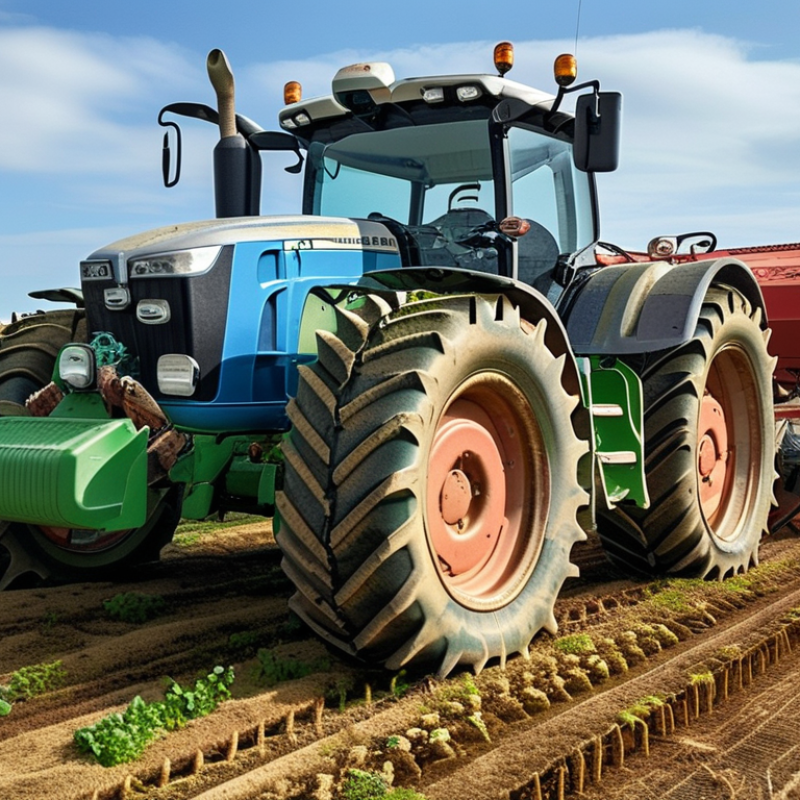
Top Tractor Harrows for Sale: Which One Is Best?
A tractor harrow breaks clods, levels soil, and mixes shallow residue before planting. The main types are disc harrows, tine harrows, and rotary harrows. Disc models cut tougher residue, while spring tines suit lighter soils and surface weed control. Rotary harrows create a finer seedbed, but they usually demand more power and careful depth control.
Working widths commonly range from 2 to 8 metres. A 2-metre harrow fits smaller fields and narrow transport routes. Wider 6–8-metre machines reduce passes across large fields. However, width must match tractor power, soil resistance, lift capacity, and road regulations. Wider is not automatically better.
The USDA 2022 Census of Agriculture recorded about 1.9 million U.S. farms and roughly 880 million acres of farmland. That scale explains why productivity and field capacity matter. The OECD-FAO Agricultural Outlook 2024–2033 projects global agricultural production growth of about 1.1% annually, with productivity providing most gains. Efficient soil preparation remains important, but fuel use and compaction deserve equal attention.
In practical checks, inspect frame welds, bearing play, tine wear, and adjustment access. Measure twice. A harrow that leaves ridges wastes later planting effort. I would not choose by width alone. Soil texture, residue load, working depth, and local service support often decide the better purchase. Some fields still need a slower, narrower machine. That is easy to overlook.
| Harrow Type | Typical Working Width | Operating Depth | Typical Tractor Power | Recommended Speed | Main Uses | Key Advantages | Main Limitations | Best Choice For |
|---|---|---|---|---|---|---|---|---|
| Chain Harrow | 2–8 m | 1–5 cm | 20–100 hp | 8–15 km/h | Pasture grooming, light seed covering, manure distribution, light soil leveling | Simple design, low draft requirement, easy storage, suitable for uneven ground | Limited soil penetration and weak performance in hard or heavily compacted soil | Small farms, pasture maintenance, and light-duty field work |
| Spring-Tine Harrow | 2–6 m | 2–8 cm | 35–120 hp | 6–12 km/h | Seedbed finishing, shallow weed control, soil aeration, breaking light crusts | Good soil leveling, flexible tines, effective shallow cultivation, moderate draft | Tines can bend or wear in stony ground; not designed for deep tillage | General seedbed preparation and shallow secondary tillage |
| Spike-Tooth Harrow | 2–5 m | 2–7 cm | 25–90 hp | 6–10 km/h | Seedbed leveling, shallow weed removal, soil surface finishing | Affordable, easy to maintain, suitable for light and medium soils | Limited adjustment and penetration; less effective in residue-heavy fields | Small tractors and conventional seedbed finishing |
| Disc Harrow | 2–6 m | 5–15 cm | 50–220 hp | 6–10 km/h | Residue incorporation, clod breaking, primary and secondary soil preparation | Cuts and mixes soil effectively; handles crop residue better than tine harrows | Higher draft, greater soil disturbance, and possible compaction under unsuitable conditions | Arable farms requiring stronger soil and residue cultivation |
| Offset Disc Harrow | 2–5 m | 8–20 cm | 70–250 hp | 5–9 km/h | Heavy primary tillage, land renovation, deep residue incorporation | Strong penetration and cutting action; suitable for firm soil and heavy residue | High draft demand, heavier transport loads, and greater risk of creating an uneven soil profile | Large tractors and demanding primary cultivation |
| Power Harrow | 2–4 m | 3–12 cm | 70–220 hp | 5–8 km/h | Fine seedbed preparation, intensive soil mixing, seed drill combinations | Produces a consistent seedbed and works effectively in one-pass systems | Requires PTO power, higher purchase and maintenance costs, and can overwork soil | Professional arable production and precision seedbed preparation |
| Rotary Hoe Harrow | 2–6 m | 2–8 cm | 40–160 hp | 8–15 km/h | High-speed crust breaking, shallow weed control, light residue spreading | Fast operation, good surface agitation, and useful for dry shallow cultivation | Performance depends on soil moisture and field conditions; limited depth control | High-speed maintenance work and shallow weed management |
| Heavy-Duty Field Cultivator with Harrow | 3–8 m | 5–15 cm | 90–300 hp | 7–12 km/h | Full-width cultivation, residue management, seedbed preparation over large areas | High output, adjustable working depth, and good compatibility with rear leveling harrows | Needs substantial lifting capacity and adequate tractor traction | Large fields and tractors with high hydraulic and drawbar capacity |
Note: Theoretical field capacity is calculated as working width × speed ÷ 10. Actual capacity is normally lower because of turning, overlap, adjustment, transport, and field conditions. Tractor power requirements vary with soil type, working depth, ballast, terrain, implement weight, and operating speed.
: It breaks clods, levels soil, mixes residue, and prepares a seedbed after plowing.
A disc harrow usually handles hard clay and heavy residue better. Use moderate depth. Deep work may create a compacted layer.
Choose one for pastures, lawns, manure spreading, and light surface leveling. It is flexible and simple. It struggles with hard ground.
It loosens soil shallowly without aggressive soil turning. It suits seedbed finishing and light cultivation. Check tooth mounting often.
Rapidly spinning tines create fine, evenly mixed soil. Correct speed matters. Too fast can make soil powdery.
A 50–80 horsepower tractor often suits lighter harrows. An 80–120 horsepower tractor can manage heavier disc units. Tractors above 120 horsepower may pull wider reinforced frames.
Work when soil is moist enough to crumble, not smear. Wet soil can form dense streaks. Very dry soil may resist the teeth.
Multiply working width, speed, and field efficiency, then divide by ten. A three-metre harrow at eight kilometres per hour may cover about 1.8 hectares hourly. Corners and gateways reduce real output.
Not always. A wide frame may lose penetration in wet or uneven ground. Measure transport width, field access, and lifting capacity first.
Avoid aggressive settings during the first pass. Inspect a short test area before covering the whole field. I once set a harrow too deep, and the tractor struggled. The seedbed became uneven. That mistake still deserves attention.
Tractor Harrows are essential implements for preparing seedbeds, breaking surface clods, controlling shallow weeds, and improving soil uniformity. This guide explains the main designs, including disc, chain, spring-tooth, and rotary harrows, along with their typical working widths from 2 to 8 meters. Each type performs differently: disc harrows are effective in heavier or residue-covered soils, chain harrows suit light finishing work, spring-tooth models provide flexible cultivation, and rotary designs offer precise surface conditioning.
Choosing the right harrow requires more than comparing prices. Important factors include tractor power, with approximately 15–25 HP per meter often needed depending on soil conditions, as well as working depth, implement weight, field capacity, and transport requirements. The comparison focuses on equipment suitable for 50–150 HP tractors and explains how soil type, crop needs, field size, and budget influence the final choice. By matching harrow design and size to practical operating conditions, buyers can achieve efficient preparation, consistent results, and better long-term value.
