A dependable hay cut begins before the blades turn. The right Tractor Hay Cutter should match your tractor’s horsepower, hydraulic capacity, hitch, and the crop you actually grow. A mower that looks ideal in a listing may struggle in thick, damp grass or on uneven ground. That mismatch costs time. Sometimes, it costs a cutting window.
Iowa State agricultural engineer Mark Hanna has shared practical guidance on farm machinery. The following is a paraphrase, not a verbatim quotation: “Match equipment to tractor capacity and field conditions, not price alone.” Keep that principle close while comparing these seven cutters. Check cutting width, blade design, required power, replacement parts, and transport needs. A tape measure beside the tractor’s rear tires can reveal clearance issues before delivery. Small details matter.
This guide looks at seven Tractor Hay Cutter options for sale in 2026, from compact models for small acreages to wider machines built for larger fields. We’ll consider where each may fit, what specifications deserve a second look, and which trade-offs buyers should expect. No single cutter suits every farm. Even a well-reviewed model can disappoint if terrain, crop, or tractor setup differs. Compare the manufacturer’s requirements with your own equipment, and verify current pricing and availability with the seller. A little doubt helps. So does measuring twice.
What Tractor Hay Cutters Do and How They Work
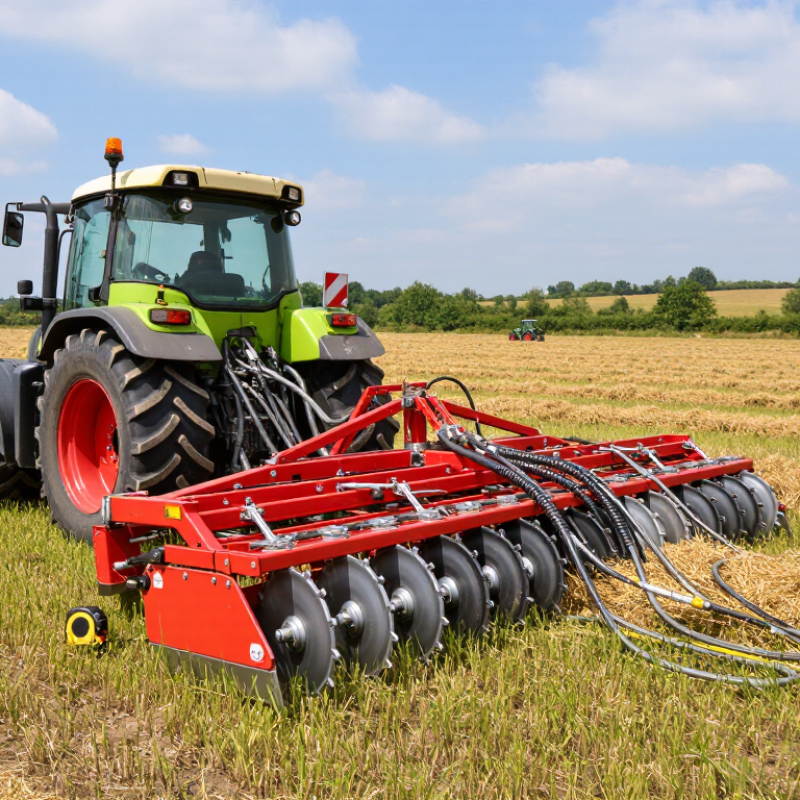
A tractor hay cutter severs standing forage and lays it in a swath or windrow for drying. On common rotary-disc models, the tractor’s power take-off drives rotating discs with small replaceable blades. The blades cut close to the ground, while the operator controls travel speed and cutting height. Keep the cutter level; scalping the soil can pull dirt into the crop.
Some machines also condition the stems. Crimping rolls or flails bruise them, helping moisture escape before baling. That matters because thick stems often dry more slowly than leaves. A mower-conditioner can shorten field time, but its settings must suit the crop and conditions. Not every field behaves alike. A tidy windrow is not proof that the forage is ready to bale.
The scale is substantial: USDA’s National Agricultural Statistics Service reported 128.8 million tons of U.S. all-hay production in its 2023 Crop Production Annual Summary. For buyers, cutter width, tractor power, terrain, and service access all affect practical output. Match the implement to the tractor’s rated PTO capacity, and check the operator’s manual for required speed and setup. More width is not always better; on uneven ground, a smaller cutter may leave a cleaner, more consistent cut.
Main Types of Tractor Hay Cutters and Their Uses
Sickle-bar cutters use reciprocating blades to shear stems cleanly. They suit smaller fields, lighter tractors, and uneven ground where careful cutting matters. Their slower pace can be a drawback in thick, lodged hay. Keep the knife sections sharp, and check for bent guards before mowing. Small details matter.
Disc mowers use rotating discs to cut dense crops quickly. They are useful on larger acreages and in heavy grass, but need enough tractor power and careful setup. Drum mowers also handle thick growth; their enclosed rotating drums are sturdy and often tolerate rougher conditions. A mower-conditioner adds rollers or flails to crimp stems, helping hay dry faster in suitable weather. Each type has trade-offs. There is no perfect choice, and matching capacity to field conditions is easier said than done.
Tips: Check the tractor’s horsepower, hitch, and hydraulic requirements against the cutter manual. Walk the field for stones, holes, and wet patches before mowing. Set cutting height to protect the crop and avoid scraping soil into the hay. After the first pass, inspect the cut: uneven strips may signal a setup issue, not a faulty machine.
7 Best Tractor Hay Cutters for Sale in 2026 – Main Types of Tractor Hay Cutters and Their Uses
This comparison covers common cutter types rather than specific products or brands. Width and PTO horsepower figures are approximate working ranges; actual requirements vary with design, crop, terrain, and operating conditions. Always check the implement manual and tractor specifications before purchasing.
How to Choose a Hay Cutter for Your Tractor and Field
Choosing a hay cutter starts with matching its cutting width to your tractor’s rated PTO horsepower, not engine size alone. A wide mower covers more ground, but it can bog down in thick, damp forage or on slopes. Check the operator’s manual for minimum horsepower, PTO speed, hitch category, and hydraulic requirements before comparing options. Fit matters.
Field conditions should guide cutter style. Sickle-bar mowers leave a clean, low-disturbance cut on relatively smooth fields. Their guards can clog in lodged or tangled crop. Disc and drum mowers handle heavier growth and faster field work, but usually demand more power and careful setup. Terrain matters. Check cutting height, skid condition, and how well the mower follows uneven ground without scalping.
Before buying, measure gates, storage space, and transport width; a mower that fits the field may not fit the shed. Ask whether blades, guards, belts, and driveline parts are readily available, and inspect wear points on used equipment. A short test cut in representative forage can reveal vibration, missed strips, and tractor strain better than a brochure. It can still mislead. Compare warranties and service support, but treat advertised acres per hour as estimates; crop density and operator pace change the result.
Seven Tractor Hay Cutters to Consider in 2026
USDA NASS’s 2024 Crop Production report estimated U.S. all-hay production at about 119 million tons.
That scale makes cutting speed important, but field size, crop moisture, and tractor power matter just as much. A sickle-bar mower suits smaller fields and careful cutting; its slower pace can feel limiting during a short weather window. Disc and drum mowers handle heavier growth quickly, though their power needs and cutting behavior differ. Check the manual, not just the sales description.
A disc mower-conditioner combines cutting and conditioning in one pass, while a roll conditioner crimps stems for faster drying. A flail mower offers another conditioning style, but may be less suitable when preserving delicate leaves is a priority.
Trailed mower-conditioners can cover wider fields, provided the tractor can manage their weight and turning radius. Front-mounted cutters improve visibility and can pair with rear equipment, but require compatible tractor hydraulics and mounting. Seven options, different trade-offs. Before choosing, measure gates, slopes, and transport routes; a wide cutter is no bargain if it cannot reach the field. These are equipment categories, not performance guarantees: crop type, adjustment, and maintenance can change results substantially.
Safe Operation, Maintenance, and Storage of Hay Cutters
Safe operation starts before the tractor moves. Park on firm, level ground, lower the cutter, disengage the PTO, set the brake, and remove the key before inspection. Wait until every blade stops. Check guards, PTO shielding, hitch pins, hydraulic hoses, and blade fasteners; replace cracked or badly worn parts. Keep bystanders well clear, especially near the discharge area. A checklist can feel tedious. Missing one loose pin can be worse. The U.S. Bureau of Labor Statistics reported 417 fatal work injuries in agriculture, forestry, fishing, and hunting in 2022, with a rate of 18.6 per 100,000 workers (Census of Fatal Occupational Injuries).
During operation, use the tractor’s rollover protective structure and fasten the seat belt. NIOSH guidance notes that ROPS and seat belts used together can prevent deaths in tractor rollovers. Keep the cutter at the manufacturer’s specified height, travel slowly over uneven ground, and avoid sharp turns on slopes. Stop if vibration changes or a blade strikes an object; inspect only after shutdown and key removal. Do not reach beneath the deck to clear tangled hay.
After cutting, clean packed grass and dirt from the deck, then inspect blades, belts, and grease points. Follow the operator’s manual for sharpening, lubrication, and fastener torque; guessing can cause avoidable wear. Store the cutter on stable supports in a dry, ventilated area, with exposed edges protected. Relieve hydraulic pressure as directed by the manual, and keep the PTO shaft shield in place. A final walk-around takes little time, but it is easy to rush it.
Common PTO Speeds for Tractor Hay Cutters
Many tractor-mounted hay cutters are designed for either 540-rpm or 1,000-rpm PTO operation. These are nominal PTO speeds, not interchangeable settings. Before mowing, confirm the cutter’s specified PTO speed, match it to the tractor, and follow the operator’s manual. Keep guards in place, disengage the PTO before clearing or servicing the cutter, and clean and inspect the machine before storage.
FAQS
It cuts standing forage and lays it in a swath or windrow for drying.
The tractor’s power take-off spins discs with replaceable blades. The operator controls travel speed and cutting height.
Sickle-bar cutters suit smaller fields and uneven ground. Disc and drum mowers handle thicker growth. Mower-conditioners also crimp stems.
Crimping rolls or flails bruise stems, helping moisture escape. Thick stems may dry more slowly than leaves.
Check PTO capacity, horsepower, hitch, and hydraulic requirements in the manuals. Consider field size and terrain, too. More width is not always better.
A suitable height protects the crop and helps prevent soil from mixing into the hay. Keep the cutter level.
Walk the field and look for stones, holes, and wet patches. Check blades, knife sections, and guards for damage.
They may point to a setup issue. Inspect the cutter after the first pass before assuming the machine is faulty.
No. A tidy row does not confirm that the forage is dry enough. It is easy to misjudge.
Conclusion
This guide explains what a Tractor Hay Cutter does and how its cutting components work to help prepare forage for drying and baling. It compares common cutter types, including rotary, disc, and sickle-bar designs, and describes the field conditions and tasks each may suit. Readers will also learn how to match a cutter to their tractor’s power and hitch setup, field size, terrain, crop type, and desired cutting width.
The article reviews seven kinds of Tractor Hay Cutter to consider in 2026, outlining practical features to compare rather than recommending a single option for every operation. It also covers safe operating habits, routine checks, blade care, cleaning, and proper storage. Together, these considerations can help farmers choose equipment that fits their needs, maintain reliable performance, and handle hay-cutting work more efficiently.
 Changlaishun
