Choosing Big Tractor Power is not a simple contest between horsepower numbers. It is a working decision shaped by acreage, soil, implements, and annual workload. A 300-horsepower tractor may look impressive beside a grain cart. Yet it could waste fuel on lighter tillage. A smaller machine may struggle when pulling a deep ripper through heavy clay. That difference appears in the field, not in a brochure.
Brian Baxter, creator of Big Tractor Power, says, “The right tractor is the one that matches the job, not simply the biggest one.” This practical view deserves careful attention. Farmers should compare required drawbar power, PTO horsepower, hydraulic flow, ballast, tire configuration, and transmission options. They should also examine turning space, road travel, operator comfort, and local service support. These details affect productivity after the purchase. They affect fatigue, too.
Start with the hardest regular task. Not the rarest one. Measure the implement’s real requirements and your field conditions. Then estimate fuel use, maintenance, depreciation, and seasonal hours. A tractor that sits unused still costs money. Bigger is not always better. However, choosing too little power can create slower passes, excessive wheel slip, and premature wear. I would also question manufacturer comparisons without field data. Demonstration results can change with soil moisture, tire pressure, and ballast. The most reliable choice combines published specifications with dealer advice, operator experience, and honest records from your own farm.
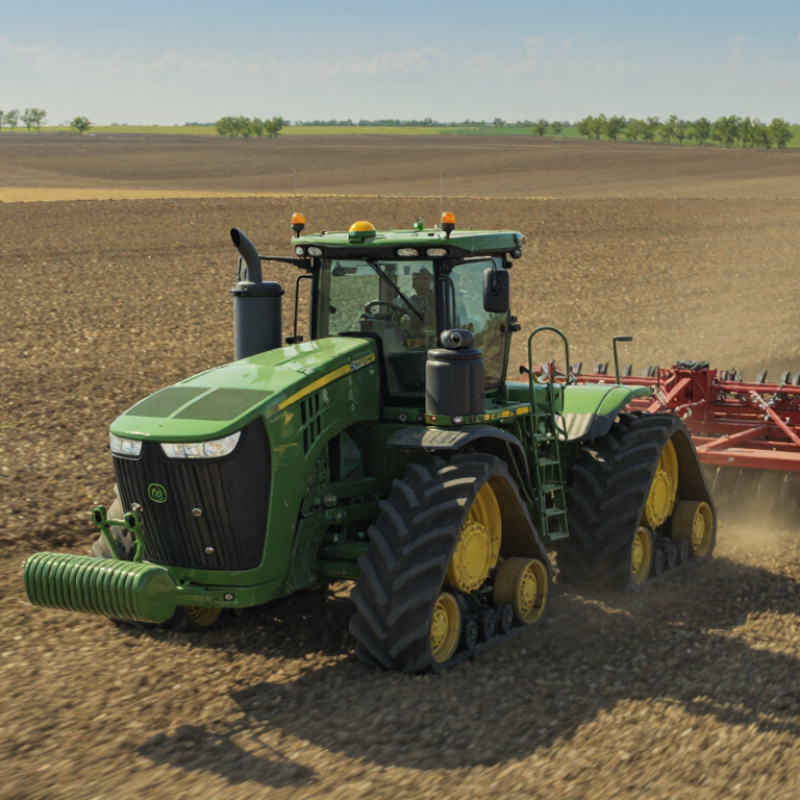
Define the Farm’s Workload and Operating Conditions
Big tractor power should begin with the farm’s workload, not a horsepower target. USDA’s 2022 Census of Agriculture recorded about 880 million acres across nearly 1.9 million farms. That averages roughly 463 acres per farm, but averages can mislead. A flat 500-acre grain farm differs greatly from a fragmented, sloping livestock operation.
List the actual jobs and their timing. Tillage, planting, hauling, mowing, and heavy trailer work create different power demands. ASABE D497.7 recommends estimating draft, speed, soil condition, and power losses before selecting tractor size. Wet clay can demand much more traction than dry loam. A steep field may also require lower speed and extra ballast. Watch the details. Tire slip, headland turns, and waiting time reduce real field capacity.
Use ASABE EP496.3 methods to estimate effective field capacity, then compare that estimate with your busiest seasonal window. A tractor working 14 hours daily may still fall behind if implements are too narrow. Conversely, excessive power can increase purchase cost, fuel use, and soil compaction. Record fuel consumption, engine load, and wheel slip during representative work. Nebraska Tractor Test Laboratory results can help verify rated PTO power, but laboratory figures are not field guarantees. That distinction matters. My own estimate might be wrong if weather changes quickly, so leave practical flexibility rather than choosing the largest available machine.
Match Tractor Horsepower to Implement and Task Requirements
How to Choose Big Tractor Power for Your Farm?
Match Tractor Horsepower to Implement and Task Requirements
Choosing tractor horsepower starts with the implement, not the tractor’s appearance. Check the implement manual for required PTO horsepower, hydraulic flow, lift capacity, and operating speed. PTO horsepower matters for rotary cutters, balers, pumps, and tillers. Drawbar power matters more for plows, subsoilers, and heavy trailers. A 100-horsepower tractor may not deliver 100 horsepower at the PTO. Transmission losses, tire condition, ballast, and terrain reduce usable power. I have seen operators focus on engine size and overlook hydraulic demand. That mistake can cause slow work and excessive fuel use. Small details matter.
Match the tractor to your hardest regular task, not an occasional extreme job. For a five-bottom plow, compare soil type, working depth, and field slopes. A wider implement can improve productivity, but only when traction remains stable. The tractor should lift the implement safely without an overloaded front axle or rear tires. For loaders, evaluate hydraulic pressure, flow, lift height, and rear ballast separately from engine horsepower. Leave a modest reserve, often around 10 to 20 percent, for changing soil and weather conditions. This is a practical guideline, not a universal rule. My own planning would improve after measuring fuel use and wheel slip across a full season. Dealers and independent mechanics can verify calculations, but provide the implement model and real working conditions. Paper specifications alone can mislead.
How to Choose Big Tractor Power for Your Farm? - Match Tractor Horsepower to Implement and Task Requirements
| Farm Task |
Typical Implement |
Typical Working Width |
Recommended PTO Horsepower |
Approximate Engine Power Range |
Important Selection Factors |
| Primary tillage |
Five-bottom moldboard plow |
1.8–2.3 m |
100–160 PTO hp |
125–200 hp |
Soil texture, working depth, traction, ballast, and field slope strongly affect the requirement. |
| Deep soil loosening |
Five-shank subsoiler |
1.5–2.5 m |
120–200 PTO hp |
150–250 hp |
Draft demand rises quickly in hard, dry, or compacted soil; adequate tractor weight is as important as horsepower. |
| Secondary tillage |
Heavy disc harrow |
4.0–6.0 m |
110–180 PTO hp |
140–225 hp |
Disc diameter, gang angle, soil moisture, residue levels, and desired working depth determine power needs. |
| Seedbed preparation |
Power harrow or rotary tiller |
3.0–4.5 m |
90–160 PTO hp |
115–200 hp |
Rotor speed, soil condition, travel speed, and required finish quality influence PTO demand. |
| Grain drilling |
Large no-till seed drill |
6.0–9.0 m |
80–150 PTO hp |
100–190 hp |
Consider soil-engaging opener load, seed and fertilizer capacity, hydraulic flow, and transport weight. |
| Row-crop planting |
16-row precision planter |
9.0–12.0 m |
80–140 PTO hp |
100–175 hp |
Hydraulic capacity, ballast, front-end weight, row spacing, and field speed may matter more than maximum horsepower. |
| Forage cutting |
Triple mower conditioner |
8.0–10.5 m |
100–160 PTO hp |
125–200 hp |
PTO speed stability, hydraulic capacity, mower lift weight, terrain, and desired field speed are key considerations. |
| Forage harvesting |
Self-loading forage wagon |
2.0–3.0 m pickup |
120–220 PTO hp |
150–275 hp |
Crop density, chopping load, trailer capacity, unloading frequency, and road transport requirements affect sizing. |
| Large-scale baling |
High-capacity square baler |
2.0–2.4 m pickup |
120–200 PTO hp |
150–250 hp |
Bale density, crop moisture, field slope, hydraulic demand, and required throughput should be evaluated together. |
| Heavy mowing |
Large rotary cutter |
6.0–9.0 m |
130–220 PTO hp |
165–275 hp |
Vegetation thickness, blade speed, cutting height, terrain, and implement transport stability affect the required power. |
| Heavy transport |
Large grain or dump trailer |
30–45 m³ capacity |
Not PTO-limited |
150–300 hp |
Prioritize braking compatibility, drawbar capacity, transmission gearing, road regulations, and gross combination weight. |
How to use this table:
Engine horsepower is commonly higher than the power available at the PTO. Use the implement manufacturer's stated minimum and maximum power requirements as the primary reference, then adjust for soil type, operating depth, terrain, altitude, ballast, tire configuration, travel speed, and desired reserve capacity. A practical target is to select a tractor that can complete the main task without operating continuously at full load.
Evaluate Soil, Terrain, Field Size, and Working Speed
How to Choose Big Tractor Power for Your Farm?
Evaluate soil before horsepower. Heavy clay demands more drawbar pull than loose, well-drained loam. Wet soil punishes optimism. USDA NRCS soil surveys identify texture, drainage, and slope, helping estimate traction and compaction risk. ASABE Standard D497.7 also separates implement draft requirements by soil condition. A moldboard plow in firm clay can need dramatically more power than a light cultivator at the same width.
Terrain changes the decision. Slope reduces traction, increases braking demands, and can make a seemingly adequate tractor feel unsafe. Slope changes everything. Four-wheel drive may improve pull, but tire size, ballast, and inflation pressure still matter. Field size matters too. The 2022 USDA Census recorded about 880 million acres across roughly 1.9 million farms, averaging approximately 463 acres, yet many farms contain small, irregular fields. Large horsepower may waste fuel during frequent turns and transport.
Working speed should be calculated, not guessed. ASABE machinery-management guidance uses effective field capacity: width multiplied by speed and field efficiency, divided by ten for hectares per hour. A 4-meter implement moving at 8 kilometers per hour, with 75% efficiency, covers about 2.4 hectares hourly. That figure falls sharply in narrow fields or rolling terrain. I still underestimate turning losses on unfamiliar land. Choose power that maintains speed under real draft loads, not only on a dealer’s specification sheet. Allow a practical reserve, perhaps 15–20%, but question that margin when annual workloads remain small.
How to Choose Big Tractor Power for Your Farm?
Evaluate soil resistance, terrain slope, field size, and operating speed before selecting tractor power. The chart uses representative draft-force cases and converts drawbar demand into a planning engine-power estimate.
Planning basis: engine power is estimated from drawbar power using
Power (kW) = Draft (kN) × Speed (km/h) ÷ 3.6, with an allowance for approximately 80% drivetrain efficiency and a 20% operating reserve. Actual requirements vary with soil moisture, implement depth, tire size, ballast, traction, and field conditions. Larger fields usually justify wider implements and higher capacity, but do not automatically require more power unless working width or speed also increases.
Compare Traction, Weight, Fuel Use, and Power Delivery
Choosing big tractor power starts with traction, not horsepower alone. Drawbar power reaches the soil only when weight, tires, and ballast work together. Excess weight can compact wet ground and increase rolling resistance. The Nebraska Tractor Test Laboratory measures drawbar, PTO, and fuel performance under controlled conditions. Its reports show why advertised engine power may not equal field power.
ASABE D497.7 estimates diesel specific fuel consumption near 0.213–0.245 kilograms per kilowatt-hour at efficient engine loads. A 150-kilowatt tractor may therefore use roughly 32–37 kilograms of diesel per hour under heavy, efficient work. Field use can rise when the engine is lightly loaded, the soil is slippery, or tire pressure is wrong. Power delivery matters too. A continuously variable transmission can hold engine speed steadily, but it may not always deliver the lowest fuel use.
Tips:
Match tractor power to the implement’s real draft demand. Check the Nebraska test report for drawbar power and hourly fuel use. Measure wheel slip in the field; about 8–15% is commonly considered a workable range for many soil conditions. I would not treat that range as universal. Clay, slopes, and tire design can change it quickly. Avoid buying extra horsepower for occasional tasks. That choice may leave unused capacity, higher fuel bills, and unnecessary soil pressure.
Confirm Budget, Compatibility, Maintenance, and Future Needs
How to Choose Big Tractor Power for Your Farm?
A larger tractor is not automatically the better choice. Begin with a realistic budget, including attachments, fuel, insurance, storage, and unexpected repairs. Keep a cash reserve for worn tires or hydraulic work. A useful calculation compares annual operating cost with the acres you actually manage. Do not size the tractor for your biggest imagined project.
Compatibility matters in the field. Match horsepower with implement requirements, PTO speed, hydraulic flow, lifting capacity, and ballast needs. Measure shed doors, gateways, and turning spaces before purchase. A tractor that cannot safely carry your mower or planter wastes money. During farm evaluations, I have seen owners overlook rear-axle width and regret poor access near barns. That mistake is easy to repeat.
Tips:
Take your common implement to a practical demonstration. Test the hitch, controls, visibility, braking, and turning radius. Ask a qualified mechanic to inspect service records and check fluid leaks. Maintenance should fit your routine, not just the manual. Confirm access to filters, grease points, diagnostic support, and replacement parts. Future needs deserve careful thought, but avoid paying for unused power. Estimate your next five years of acreage, heavier soil work, and possible attachments. My own planning has sometimes been too optimistic; projected expansion did not always happen. A smaller, well-maintained tractor may outperform a larger machine that strains the budget. Leave time for operator training and seasonal servicing. Small oversights become expensive in wet fields.
Conclusion
Choosing the right Big Tractor Power starts with understanding the actual workload and operating conditions on your farm. Consider the types of jobs you perform, such as tillage, planting, hauling, or land preparation, and identify the horsepower and hydraulic capacity required by each implement. A tractor should provide enough power to work efficiently without being unnecessarily oversized. Soil type, slopes, field size, and desired working speed also influence the best choice, since heavier soils and challenging terrain may require greater traction and stability.
Beyond engine power, compare tractor weight, tire or track performance, fuel consumption, and how smoothly power reaches the ground and the implements. A practical decision should also account for purchase and operating costs, attachment compatibility, maintenance access, and the availability of service support. Finally, consider future expansion, larger implements, and changing workloads. Selecting a tractor with balanced capability and reasonable reserve power can improve productivity, reduce operating stress, and deliver better long-term value for the farm.
 Changlaishun
