
Changlaishun Changlaishun

How to Choose the Best Tractor Sprinkler for Your Farm?

Time:2026-10-01 Author:Charlotte
0%

Choosing the right Tractor Sprinkler can change how efficiently your farm uses water, labor, and fuel. It is not simply a matter of selecting the largest model or the lowest price. Field size, crop height, soil type, water pressure, and terrain all affect performance. A machine that works well on a flat wheat field may struggle in uneven vegetable beds.

This guide explains the practical details farmers should examine before buying. We will compare travel speed, spray width, hose length, water coverage, reel construction, and maintenance access. We will also consider operating costs, replacement parts, and manufacturer support. These details matter when the tractor sprinkler must work during a narrow irrigation window. A blocked nozzle or weak drive system can leave dry strips across a field.

Look closely at your own conditions.

Reliable selection begins with accurate information. Measure the field instead of relying on memory. Check the pump’s real pressure under load, not only its advertised rating. Walk the rows and identify slopes, obstacles, muddy areas, and fragile crops. These observations often reveal problems that product brochures overlook. No system is perfect. Even experienced buyers can underestimate setup time or seasonal maintenance. That is why this article balances technical specifications with practical judgment. The goal is not to promote one universal model, but to help you choose a Tractor Sprinkler that delivers consistent coverage, manageable operating costs, and dependable service across changing farm conditions.
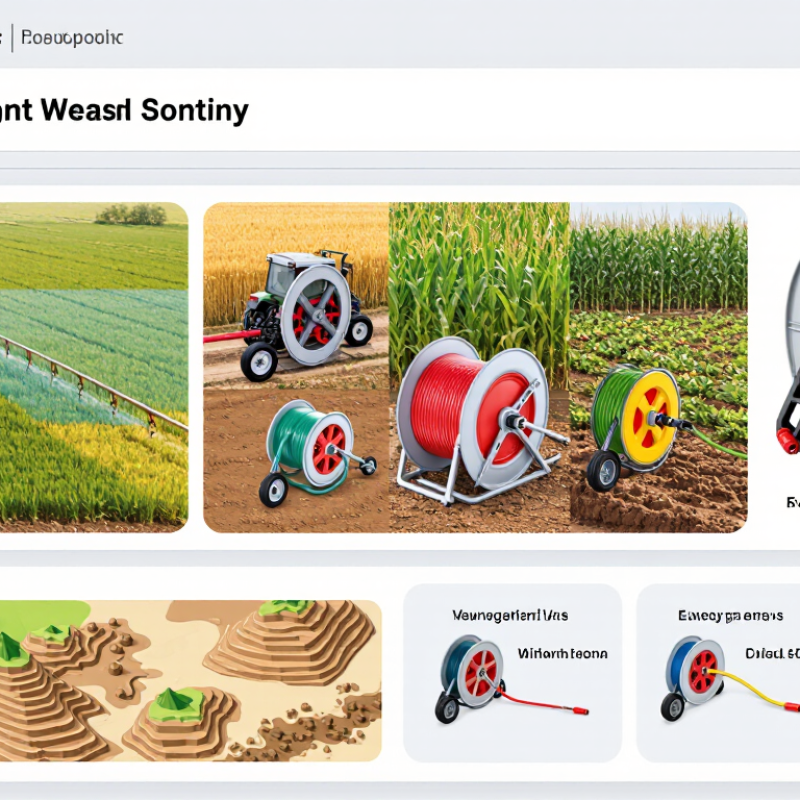
How to Choose the Best Tractor Sprinkler for Your Farm?

Define Your Farm’s Irrigation Needs and Field Conditions

Choosing the best tractor sprinkler begins with measuring your farm’s actual irrigation needs. List each crop, its growth stage, and its weekly water demand. Young vegetables may need light, frequent watering, while mature grain crops often require deeper applications. Check your water source, available flow, and pumping pressure before selecting equipment. A sprinkler cannot perform well when the water supply is inconsistent.

Walk through the field after irrigation. Look for dry ridges, standing water, and uneven crop growth. These signs reveal more than a brochure can. Sandy soil drains quickly and may need shorter irrigation cycles. Clay soil absorbs water slowly, so excessive application can create runoff. Slopes require special attention, especially where water collects below wheel tracks. Measure field width and access routes, too. A tractor sprinkler must move without damaging plants or compacting wet soil.

Practical testing matters. Place simple containers across the field and compare collected water after one pass. The depth should remain reasonably consistent. Wind can distort the spray pattern, even when pressure looks correct. I have seen equipment appear efficient near the water source but underperform at the far end. That mistake is easy to miss. Recheck pressure there. Keep notes after each irrigation cycle, including soil moisture and weather conditions. A neat plan can still be wrong when field conditions change. Adjust slowly, and observe the crop again.

How to Choose the Best Tractor Sprinkler for Your Farm?

Define your farm’s irrigation needs and field conditions by selecting a sprinkler application rate below the soil’s infiltration capacity. This helps reduce runoff, erosion, and waterlogging.

How to use this chart: Sandy soils generally accept water faster, while clay soils require slower application rates. Choose a tractor sprinkler whose application rate stays below the recommended limit for your field’s soil type, then adjust travel speed and operating pressure according to crop water demand and field slope.

Compare Tractor Sprinkler Types, Coverage, and Watering Methods

Choosing the best tractor sprinkler starts with comparing its watering method and field coverage. A tow-behind traveling sprinkler suits large, open fields because it moves steadily while spraying. A mounted boom system offers more even application across straight crop rows. A water-reel sprinkler with a rain gun reaches farther, but wind can distort its pattern. Smaller farms may prefer a tank with spray bars for controlled passes near barns or irregular plots.

Coverage depends on nozzle flow, operating pressure, travel speed, and field shape. Never judge reach from the nozzle label alone. Measure the wetted width in calm conditions, then check for dry strips between passes. In field tests, overlapping about 10 to 20 percent often improves uniformity, although soil type changes the result. Sandy soil may need shorter, lighter applications. Heavy clay needs slower watering to reduce runoff.

Watering early in the morning usually limits evaporation and wind drift. Evening irrigation can work, but wet foliage may remain longer and increase disease pressure in some crops. I once estimated a sprinkler’s daily coverage too generously because I ignored refilling time and turns. That mistake reduced efficiency noticeably.

Watch the pressure gauge, inspect clogged nozzles, and record water depth with simple collection cups. Real measurements beat attractive specifications. Think carefully before choosing the widest spray pattern.

Evaluate Tractor Compatibility, Mobility, and Operating Requirements

Choosing the best tractor sprinkler starts with a careful match between the machine and the irrigation unit. Check the tractor’s horsepower, hydraulic capacity, hitch type, and maximum towing load. A sprinkler may look compact, yet its water-filled reel can become extremely heavy. Measure twice. Small errors matter.

Mobility also affects daily efficiency. Inspect field entrances, soil firmness, slopes, and turning space before selecting a model. Large wheels help on uneven ground, but they can increase width and transport difficulty. I have seen operators choose a powerful unit that could not pass through a narrow gate. That mistake created delays during a dry week. A suitable sprinkler should move steadily without excessive wheel slip or deep ruts.

Operating requirements deserve equal attention. Confirm the required water pressure, flow rate, hose length, and irrigation coverage. Match the sprinkler’s application rate to the soil, because heavy output can cause runoff on compacted ground. Hydraulic or mechanical controls should be simple enough for routine adjustments. Keep it practical. Check fuel use, maintenance access, braking, and storage conditions. I would also test the unit with the actual tractor, not a similar one. Field conditions are rarely as tidy as a specification sheet suggests. A short trial can reveal vibration, poor balance, or controls that feel awkward after several hours.

Check Performance, Durability, Maintenance, and Safety Features

How to Choose the Best Tractor Sprinkler for Your Farm?

Performance should be measured in the field, not only on a specification sheet. Compare water pressure, travel speed, spray width, and application uniformity. FAO’s AQUASTAT data reports that agriculture accounts for about 70% of global freshwater withdrawals. Uneven spraying can waste water and stress crops. Place collection cups across the wetted area, then compare volumes after one pass. A useful machine should maintain steady pressure as the hose extends. Check the regulator and turbine response carefully. Small pressure drops matter.

Durability depends on more than a thick frame. Inspect the hose reel, axle, gearbox, bearings, and nozzle assembly. Galvanized or corrosion-resistant parts usually tolerate wet, dusty fields better. FAO’s State of Food and Agriculture 2020 highlights growing pressure on agricultural water resources. Choose components that can survive frequent seasonal use. A cheaper reel may become expensive after one damaged hose. I have learned that appearance can mislead. Check welds, seals, and wheel alignment closely.

Maintenance should be simple enough for daily work. Clean filters, inspect nozzles, grease moving joints, and drain water before freezing weather. Keep spare seals nearby. Safety deserves equal attention. Select models with pressure relief, guarded moving parts, stable supports, and a reliable shutoff. Maintain safe clearance from overhead electrical lines, following local requirements. No checklist catches everything. Recheck the machine after transport, especially when the ground is uneven.

How to Choose the Best Tractor Sprinkler for Your Farm? - Check Performance, Durability, Maintenance, and Safety Features

Evaluation Dimension Compact Farm Model Mid-Size Farm Model Heavy-Duty Farm Model What to Check Before Buying
Suitable Farm Area Small fields, orchards, gardens, and irregular plots Medium-sized fields and mixed-crop farms Large fields, pasture, and high-capacity agricultural operations Match the sprinkler’s travel distance and coverage width to field size and shape.
Typical Hose Diameter 25–35 mm 32–50 mm 50–75 mm A larger hose usually supports greater flow, but it also requires more storage space and pulling power.
Typical Hose Length 100–200 m 200–400 m 300–600 m Choose enough length to reach the farthest irrigation point without frequent repositioning.
Operating Pressure Approximately 2–5 bar Approximately 3–7 bar Approximately 4–10 bar Confirm that the farm pump can maintain the required pressure at the sprinkler inlet.
Typical Water Flow Approximately 10–30 m³/h Approximately 20–60 m³/h Approximately 40–120 m³/h Check pump capacity, water-source availability, nozzle size, and pressure loss through the hose.
Travel Speed Adjustment Manual or basic hydraulic adjustment Variable-speed gearbox or hydraulic control Fine hydraulic control with speed monitoring Slower travel generally increases application depth; verify that speed remains consistent across the field.
Typical Coverage Width 20–40 m 30–60 m 50–90 m Select a width that provides adequate overlap while limiting overspray beyond field boundaries.
Application Uniformity Suitable for simple layouts and moderate uniformity requirements Good uniformity with correctly selected nozzle and pressure High uniformity potential for large areas and demanding crops Look for a regulated pressure system, matched nozzles, stable travel speed, and adjustable spray angle.
Frame and Chassis Lightweight steel frame for easy transport Reinforced steel frame with corrosion protection Heavy-gauge frame with reinforced axle and support points Inspect weld quality, frame rigidity, axle load rating, and protection against rust.
Hose Durability Flexible hose for light to moderate use Abrasion-resistant hose for regular field use Heavy-duty hose designed for frequent deployment and high pulling loads Check bend radius, abrasion resistance, coupling strength, UV resistance, and replacement cost.
Maintenance Access Basic access to gearbox, bearings, and nozzles Service points for gearbox, reel, axle, and water connections Centralized service points and replaceable wear components Choose a design that allows safe lubrication, filter cleaning, nozzle removal, and hose inspection.
Routine Maintenance Tasks Flush the hose, clean nozzles, lubricate bearings, and check tire pressure All compact-model tasks plus gearbox oil and coupling inspections Frequent hose, reel-drive, hydraulic, axle, and structural inspections Review the maintenance schedule and confirm that filters, seals, nozzles, and couplings are readily available.
Safety Features Pressure relief valve, guarded moving parts, stable jack, and wheel chocks All compact features plus hose-tension control and emergency shutoff Full guarding, automatic stop system, pressure protection, braking support, and high-load towing equipment Never operate without pressure relief, secure towing connections, guards, stable supports, and an emergency stop method.
Tractor Requirement Low to moderate drawbar capacity Moderate drawbar capacity and suitable hydraulic or PTO capability High drawbar capacity, adequate ballast, and compatible hydraulic or PTO systems Verify towing weight, hitch category, braking requirements, turning radius, and available power.
Best Choice When Low purchase cost, easy movement, and simple operation are priorities Balanced performance, durability, and operating cost are required High daily output, long hose runs, and demanding field conditions justify the investment Base the decision on water supply, crop needs, field dimensions, labor availability, and total operating cost.
Important: The specifications shown are typical operating ranges for tractor-towed irrigation travelers. Actual performance depends on nozzle size, inlet pressure, hose friction, terrain, water quality, travel speed, and field conditions. Always confirm the manufacturer’s technical data and local safety requirements before operation.

Balance Purchase Cost, Long-Term Value, and Supplier Support

How to Choose the Best Tractor Sprinkler for Your Farm?

A low purchase price can look attractive beside a dusty field. However, the cheapest tractor sprinkler may need costly repairs after one season. Compare frame strength, hose length, nozzle quality, and water coverage before checking the final price. Ask how evenly it distributes water at different pressure levels. Uneven coverage can leave dry crop rows and waste pumping energy. That matters.

Long-term value depends on daily handling. A reliable gearbox should move smoothly across uneven ground without frequent adjustment. Check tire width against your field tracks. Narrow wheels may sink in wet soil, while oversized wheels can damage planted rows. Test it loaded. Also inspect hose connections, rust protection, and access to replacement seals. A common mistake is judging equipment only by its appearance. Clean paint does not prove durable construction.

Supplier support can protect your investment when harvest schedules are tight. Request a written parts list, maintenance instructions, and clear warranty terms. Ask how quickly common parts can ship to your farm. Practical support matters more than polished sales language. A supplier should explain pressure limits, seasonal storage, and safe operation without avoiding difficult questions. If technical advice changes between phone calls, treat that as a warning. I would also contact existing users about repair frequency and actual water coverage. Their feedback may be less impressive, but usually more useful. Leave room for doubt. Even a well-built sprinkler can underperform when the pump, terrain, or hose layout is poorly matched.

FAQS

How do I estimate my farm’s irrigation needs?

List each crop, growth stage, and weekly water demand. Young vegetables may need light, frequent watering. Mature grains often need deeper applications.

What field conditions should I inspect before choosing a tractor sprinkler?

Look for dry ridges, standing water, uneven growth, slopes, and wheel tracks. Sandy soil drains quickly. Clay soil may create runoff.

How can I test water distribution in the field?

Place simple containers across the wetted area. Run one irrigation pass, then compare collected depths. The results may surprise you.

Why should I check pressure at the far end?

Pressure can drop as the hose extends. A sprinkler may perform well near the water source but underperform across the field. Recheck both locations.

Which performance details matter most?

Compare pressure, travel speed, spray width, and application uniformity. Also observe regulator and turbine response. Small pressure drops matter.

What parts should I inspect for durability?

Check the hose reel, axle, gearbox, bearings, seals, welds, and nozzle assembly. Corrosion-resistant parts usually handle wet, dusty fields better.

What maintenance should the equipment receive?

Clean filters and nozzles after use. Grease moving joints, inspect connections, and drain water before freezing weather. Keep spare seals nearby.

Which safety features should a tractor sprinkler include?

Look for pressure relief, guarded moving parts, stable supports, and a dependable shutoff. Keep safe clearance from overhead electrical lines. Recheck the machine after transport.

How should I compare purchase price and long-term value?

Compare frame strength, hose length, nozzle quality, wheel width, and repair access. A cheaper reel may become costly after one damaged hose.

How can I judge supplier support?

Request parts lists, maintenance instructions, warranty terms, and shipping details. Contact existing users about repairs and actual water coverage. Sales language can sound better than field experience.

Conclusion

Choosing the best Tractor Sprinkler starts with understanding your farm’s specific irrigation needs. Consider field size, crop type, soil condition, terrain, water availability, and the required watering frequency. Compare different sprinkler designs, coverage ranges, spray patterns, and watering methods to determine which system can distribute water evenly while minimizing waste. It is also important to confirm that the sprinkler can connect properly to your tractor and operate effectively across the areas that need irrigation.

Before making a purchase, evaluate mobility, setup time, operating requirements, water pressure, and fuel or power demands. Reliable construction, corrosion resistance, simple maintenance, and safety features can improve daily performance and extend service life. Finally, compare the initial price with long-term operating costs, expected durability, repair needs, spare-parts availability, and supplier support. A well-chosen Tractor Sprinkler should provide consistent irrigation, practical operation, and strong overall value for your farm’s changing needs.

Charlotte

Charlotte

Charlotte is a seasoned marketing professional with a deep understanding of the company's portfolio and a passion for elevating its presence in the market. With a keen eye for detail and a commitment to excellence, she ensures that our professional blog is regularly updated with insightful articles......