In the ever-evolving world of agriculture, efficiency is key. Orchard tractors play a crucial role in enhancing farm productivity. These specialized machines are designed to maneuver easily among trees, ensuring minimal damage to crops. With a variety of models available, selecting the right orchard tractor can be daunting.
Farmers often grapple with choices based on size, power, and features. Some tractors prioritize agility, while others focus on strength. The ideal orchard tractor should balance both traits. This balance is vital for successful farming operations. Not all tractors fit every orchard type. Each farm has unique needs that must be considered carefully.
As we delve into the top 10 orchard tractors, it is essential to recognize that no single model is perfect for every situation. The most efficient tractor for one farm may not suit another. Understanding specific requirements can lead to better decision-making. This guide aims to provide insights that farmers can reflect on, helping them choose the most effective solutions for their land.
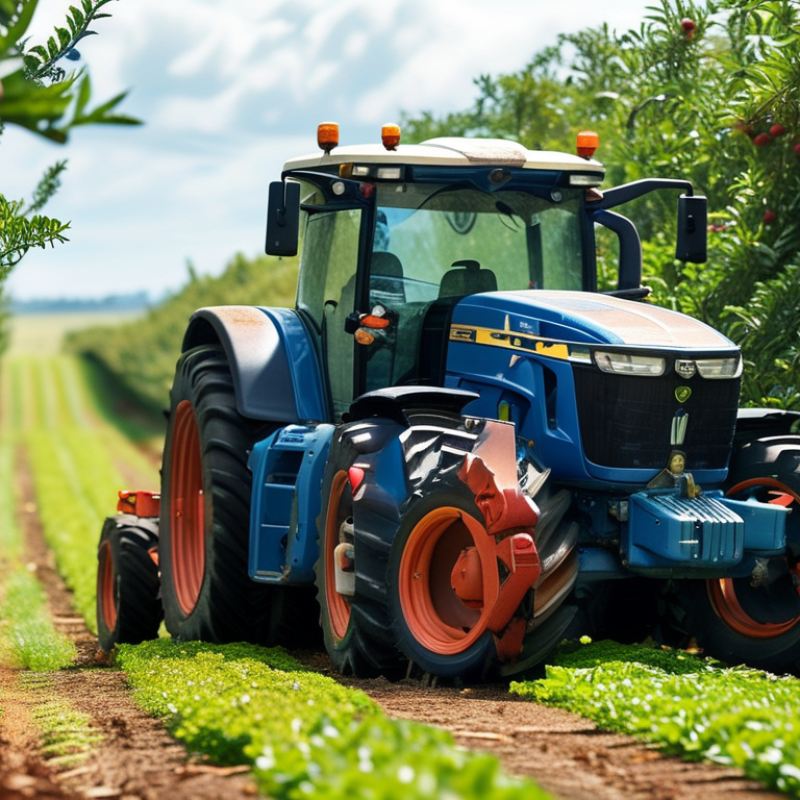
Overview of Orchard Tractors and Their Importance in Farming
Orchard tractors play a crucial role in modern farming, especially in the cultivation of fruit trees and vineyards. These specialized machines maximize efficiency in narrow spaces. Reports indicate that the global market for orchard tractors is expected to reach around $4 billion by 2025. This reflects their growing significance in sustainable farming practices.
Using orchard tractors allows farmers to manage terrain that standard tractors cannot navigate effectively. They help with tasks such as planting, spraying, and harvesting. However, some operators find these tractors less versatile for larger projects. Maintenance can be a challenge too. A recent survey revealed that about 30% of farmers felt unsatisfied with the service support for their equipment.
Moreover, technology is evolving in this field. Autonomous tractors are gaining traction. But, there are concerns about their dependence on technology. A study shows that 45% of farmers worry about failures in automated systems. Balancing tradition with innovation remains key to advancing orchard farming practices.
Key Features to Consider When Choosing an Orchard Tractor
Choosing the right orchard tractor is essential for efficient farming. Several key features should be evaluated to ensure optimal performance.
Prioritize the tractor's size and maneuverability. Compact tractors can easily navigate narrow orchard rows, minimizing damage to plants and soil.
Power and engine type are also crucial. A tractor with adequate horsepower can handle various tasks, from tilling to hauling. Look for models with efficient fuel consumption. This saves money and reduces environmental impact.
Additionally, consider the ease of maintenance. Tractors with accessible parts make routine check-ups simpler. Comfort features, such as ergonomic seating and user-friendly controls, can enhance productivity.
Always assess the specific needs of your orchard. Reflect on how different tasks demand varying functionalities. This thoughtful approach will help ensure you choose a tractor that truly meets your farming goals.
Top 10 Orchard Tractors Ranked by Performance and Efficiency
In the world of farming, efficiency is key. Orchard tractors play a vital role in maximizing productivity. When selecting an orchard tractor, consider performance and efficiency as primary factors. High-performance models can navigate tight spaces, ensuring that no crop goes unharvested. Efficient tractors save time and fuel, which ultimately lowers operational costs.
Tips: Always assess the terrain and size of your orchard before making a choice. A compact model might work best in narrow rows, while a more powerful tractor can handle larger areas.
Performance is not only about power. It also includes features like ease of operation and maintenance. Tractors with user-friendly controls can reduce operator fatigue. This aspect becomes crucial during long working hours. Furthermore, regularly scheduled maintenance is necessary to keep the tractors running smoothly. Skipping this can lead to costly breakdowns.
Tips: Invest time in learning the machine's operations. Familiarity enhances efficiency. Document any issues to identify recurring problems. This can guide future equipment choices. Balancing performance and efficiency is a continuous process, requiring regular evaluation and adjustment.
Comparative Analysis of Orchard Tractors for Diverse Farming Needs
When it comes to orchard farming, selecting the right tractor can vastly improve efficiency. Orchard tractors are designed for narrow spaces and specific tasks. Their compact size allows for maneuverability between rows of trees, ensuring that operations run smoothly. From planting to harvesting, tailored features on these tractors can make diverse farming tasks easier and more productive.
However, farmers must analyze their unique needs before choosing a tractor. For instance, some require higher horsepower for heavy-duty tasks, while others need a lightweight option for delicate operations. Lift capacity, transmission type, and ease of operation are also crucial factors. It’s essential to evaluate the terrain and existing equipment to make informed decisions. Investing time in this analysis can prevent costly mistakes down the road.
Not all tractors will excel in every environment. Some models may struggle with steep terrain, impacting performance and safety. On the other hand, others might not handle wet conditions effectively. Farmers should also consider maintenance and parts availability. Reliability remains a cornerstone of efficient farming. Thus, careful evaluation of features against real-world demands is vital for achieving success in orchard management.
Future Trends in Orchard Tractor Technology and Design
The future of orchard tractor technology is evolving quickly. Precision agriculture is becoming a standard in farming practices. Advancements in automation are crucial. Reports show that 70% of farmers feel optimistic about integrating smart farming technologies. These innovations can significantly enhance productivity. For instance, GPS-guided systems allow for better tracking of field activities. This can decrease waste and improve crop yields.
Electric and hybrid options are gaining traction too. A recent study indicates that electric tractors can reduce emissions by up to 50%. As sustainability becomes a priority, more farmers are considering these options. However, the initial costs can be a barrier. Many still question the long-term savings versus upfront investment. It is a challenge that cannot be overlooked, especially for small-scale farmers.
Innovation in design is also important. Compact models are becoming popular for narrow orchard rows. Studies suggest that user-friendly controls can increase efficiency. Ergonomic designs reduce operator fatigue. Yet, the reliability of new technology remains a topic of discussion. Some farmers express concerns about long-term service and maintenance. These reflections are essential for progress and improvement in orchard tractor solutions.
Top 10 Orchard Tractors for Efficient Farming Solutions
This chart illustrates the power (in horsepower) of the top 10 orchard tractors, showcasing their efficiency for modern farming solutions. As technology advances, the trend in tractor design increasingly emphasizes powerful and efficient machinery to meet the demands of orchard farming.
FAQS
: Consider size and maneuverability. Compact tractors navigate narrow rows easily, minimizing plant and soil damage.
Adequate horsepower allows for various tasks, such as tilling and hauling. Fuel efficiency also saves money.
Tractors with accessible parts simplify routine check-ups. This contributes to better long-term performance.
Ergonomic seating and user-friendly controls boost productivity. Operator comfort can lead to better focus and efficiency.
Precision agriculture and automation are becoming standard. Innovations like GPS-guided systems enhance tracking and reduce waste.
Electric options can reduce emissions by up to 50%. However, initial costs may deter some farmers.
The balance between long-term savings and upfront investments can be tough. This challenge needs careful consideration.
Compact models are important for dense orchards. User-friendly designs help in reducing operator fatigue.
Reliability and maintenance of new technology are often questioned. These concerns highlight areas for improvement.
Reflect on the specific tasks and functionalities required. A thoughtful approach aids in better decision-making.
Conclusion
Orchard tractors play a crucial role in modern farming, especially in the management and maintenance of fruit orchards. Their compact design and specialized features allow them to navigate narrow rows and delicate environments effectively. When selecting an orchard tractor, key features such as engine power, maneuverability, and implement compatibility are essential considerations to ensure optimal performance and efficiency.
The article provides a comprehensive ranking of the top 10 orchard tractors based on their performance metrics and operational efficiency. It also includes a comparative analysis tailored to diverse farming needs, highlighting how different models suit various farming practices. Additionally, insights into future trends in orchard tractor technology and design showcase advancements aimed at enhancing productivity and sustainability in farming operations. This overview emphasizes the significance of choosing the right orchard tractor as a vital investment for effective farming solutions.
 Changlaishun
