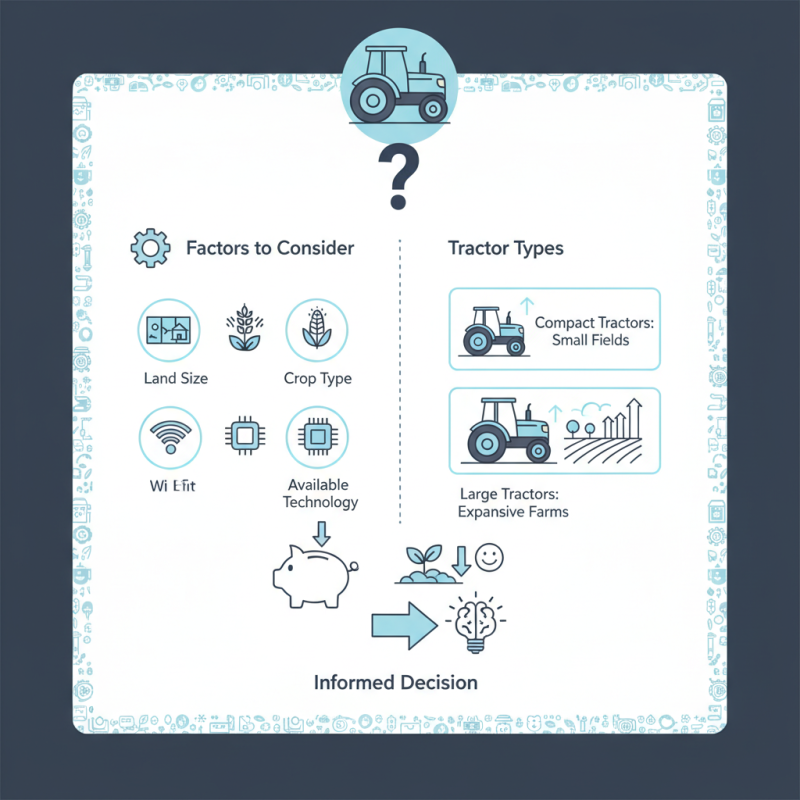
When it comes to farming, understanding "The Tractor" is essential. Experts like John Deere’s Chief Engineer, Mark Johnson, emphasize its importance: “A tractor can transform your farming efficiency.” Choosing the right tractor is not a simple task. Each farmer's needs vary greatly. Factors include land size, crop type, and available technology.
For instance, a compact tractor may be sufficient for small fields, while a larger one may be necessary for expansive farms. The market is filled with options, which can be overwhelming. Many farmers make mistakes by not evaluating their specific requirements. Reflecting on these choices is crucial.
Additionally, investing in the wrong tractor can lead to financial strain. It's important to analyze your long-term goals. Understand how "The Tractor" fits into your farming strategy. This ensures your purchase is both practical and beneficial. Making an informed decision will contribute to a more productive farming operation.
Understanding the Definition and Functionality of a Tractor
A tractor is a powerful vehicle designed for agricultural tasks. It is primarily used for plowing, tilling, and transporting heavy loads. According to a report by the American Society of Agricultural and Biological Engineers (ASABE), over 180,000 tractors were sold in the U.S. in 2021 alone. This reflects the growing dependence on tractors in modern farming operations.
When choosing the right tractor, consider the size of your land and the type of work you need to perform. For small-scale farms, a compact tractor might suffice. However, larger operations may require more powerful options. The horsepower, weight, and attachments should align with your specific agricultural needs.
Tip: Always test drive a tractor before making a purchase. Factors such as comfort and visibility can greatly impact your efficiency. Additionally, don’t overlook maintenance costs related to the tractor model you choose.
Understanding the different types of tractors can also aid in your decision. Utility tractors are versatile for various tasks, while specialty tractors excel in specific functions. Reflect on your long-term goals and whether a tractor can adapt to future needs.
Key Specifications to Consider When Choosing a Tractor
When choosing a tractor, understanding key specifications is essential.
Horsepower is a critical factor.
A higher horsepower means the tractor can handle larger implements and tougher terrain.
According to the American Society of Agricultural and Biological Engineers, tractors typically range from
20 to over 600 horsepower. This variance caters to different agricultural needs.
Another crucial specification is the type of transmission.
Tractors come with manual, automatic, or hydrostatic transmissions.
Manual options offer more control for experienced operators, while hydrostatic transmissions provide ease of use for beginners.
A recent industry report suggested that hydrostatic tractors are gaining popularity due to their user-friendly features, especially among small-scale farmers.
Weight and size are equally important.
Heavier tractors provide better traction, particularly in wet conditions.
However, a heavier tractor can be harder to maneuver in smaller fields.
Farmers must consider these dynamics when calculating their optimal tractor size.
Balancing power, agility, and ease of use often leads to reflection on what features truly matter in day-to-day operations.
The Importance of Tractor Size for Agricultural Efficiency
When selecting a tractor, size plays a crucial role in agricultural efficiency. The right size ensures optimal power for various tasks. A compact tractor may be suitable for small plots, aiding in tasks like tilling and planting.
Larger tractors excel in extensive fields, managing heavy equipment and completing tasks swiftly.
Consider the type of crops you cultivate. Different crops have different needs for soil preparation and planting depth. An oversized tractor can cause soil compaction, reducing crop yields. On the other hand, opting for a smaller model might hinder productivity on larger farms.
Understanding the balance between power and the specific agricultural tasks is vital. Many farmers face the challenge of choosing the right size. They might buy equipment that’s either too large or too small. This can lead to inefficiencies and increased operational costs.
Therefore, it's essential to evaluate your farm layout, soil type, and crop requirements before making a decision. The goal is to find a tractor size that enhances productivity while minimizing resource waste.
Evaluating Power and Performance: Engine Ratings Explained
When choosing a tractor, understanding engine ratings is crucial. The engine's power dictates what tasks the tractor can handle. A higher horsepower often means better performance in tough conditions. But more power isn’t always better. It can lead to fuel inefficiency and unnecessary costs.
Evaluate the torque as well. Torque measures the engine’s pulling capacity. A tractor with high torque can accomplish heavy-duty tasks without overworking the engine. This rating is often more important than horsepower for tasks like plowing or hauling. Consider the type of work you'll do and choose a tractor that aligns with those needs.
Don’t forget longevity and maintenance. A powerful engine might wear out quickly if not properly maintained. Regular check-ups are essential; ignoring these can lead to costly repairs. Reflecting on these details can help prevent regrets and enhance the tractor's lifespan.
Assessing Budget and Maintenance Costs for Long-Term Ownership
When considering tractor ownership, understanding budget and maintenance costs is crucial. A well-maintained tractor can significantly impact the overall cost of ownership. According to a report by the American Society of Agricultural Engineers, farmers spend an average of $10,000 annually on tractor-related expenses. This includes fuel, repairs, and routine maintenance.
Maintenance can vary widely based on the tractor's size and use. For example, routine oil changes, which typically occur every 100 hours of operation, can cost about $200. On the other hand, major repairs can run into thousands. A five-year maintenance plan could easily exceed $40,000 for larger, more complex models.
It's essential to assess your needs carefully. Newer models might promise lower fuel consumption and advanced technology, but can also lead to higher initial costs. The key is balance; investing in a reliable tractor may save money long-term. Many owners overlook depreciation as well. Tractors lose around 30% of their value in the first few years. This often leads to regret. Buyers must weigh these factors carefully.
FAQS
: The right tractor size ensures optimal power and efficiency for various agricultural tasks.
An oversized tractor can cause soil compaction, negatively impacting crop yields and soil health.
A smaller tractor may hinder productivity on larger farms and struggle to manage heavy tasks.
Engine ratings determine task capability. Higher horsepower can improve performance, but it may lead to inefficiency.
Yes, torque indicates pulling capacity, which is critical for heavy-duty tasks like plowing and hauling.
Regular check-ups are essential to prevent costly repairs and extend the tractor's lifespan.
Different crops require specific soil preparation and planting depth, impacting the suitable tractor size.
Farmers often select equipment that is too large or small, leading to inefficiencies and increased costs.
Farmers should assess their farm layout, soil type, and crop needs before making a decision.
Choosing a tractor with excessive power can often lead to unnecessary costs and fuel inefficiency.
Conclusion
The tractor is a crucial piece of equipment in modern agriculture, designed to provide power and versatility for various farming tasks. Understanding its definition and functionality is essential for farmers seeking to enhance their efficiency. Key specifications, such as engine power, weight, and size, significantly influence the tractor's performance and suitability for specific agricultural tasks.
When choosing the right tractor, it's important to evaluate factors like size in relation to the operational area, as this directly impacts agricultural efficiency. Additionally, assessing potential power output and performance parameters, such as engine ratings, helps in making informed decisions. Budget considerations and long-term maintenance costs also play a vital role in ownership viability. By carefully analyzing these aspects, farmers can select the tractor that best meets their farming needs and optimizes productivity.
 Changlaishun
