
Changlaishun
A Lawn Mower Tractor can turn a long afternoon of mowing into a more manageable routine. It suits larger lawns, open fields, and properties where a walk-behind mower means repeated trips across the same ground. The practical benefits are easy to picture: a comfortable seat, a wider cutting deck, and fewer passes around mature trees. Still, size alone is not a reason to buy one.
The U.S. Department of Agriculture’s 2022 Census of Agriculture counted about 880 million acres of farmland nationwide. That figure describes agricultural land, not residential lawns, so it should not be used to estimate mower demand. It does, however, show why land size and use matter when choosing equipment. Purdue University turfgrass specialist Dr. Aaron Patton’s extension guidance can be paraphrased this way: “Match mowing equipment to the site and the turf.” This is a paraphrase, not a verbatim quotation. His practical point is worth considering: lawn size, slopes, obstacles, and mowing frequency all affect the right choice.
A tractor may save time on broad, relatively open ground. Yet narrow gates, steep sections, storage limits, and maintenance costs can change the calculation. That part is easy to overlook. The Outdoor Power Equipment Institute’s consumer guidance also encourages buyers to consider equipment fit and safe operation, rather than purchase by power alone. In this guide, we’ll look at when a Lawn Mower Tractor makes sense, which features matter, and where another mower may be the wiser choice.
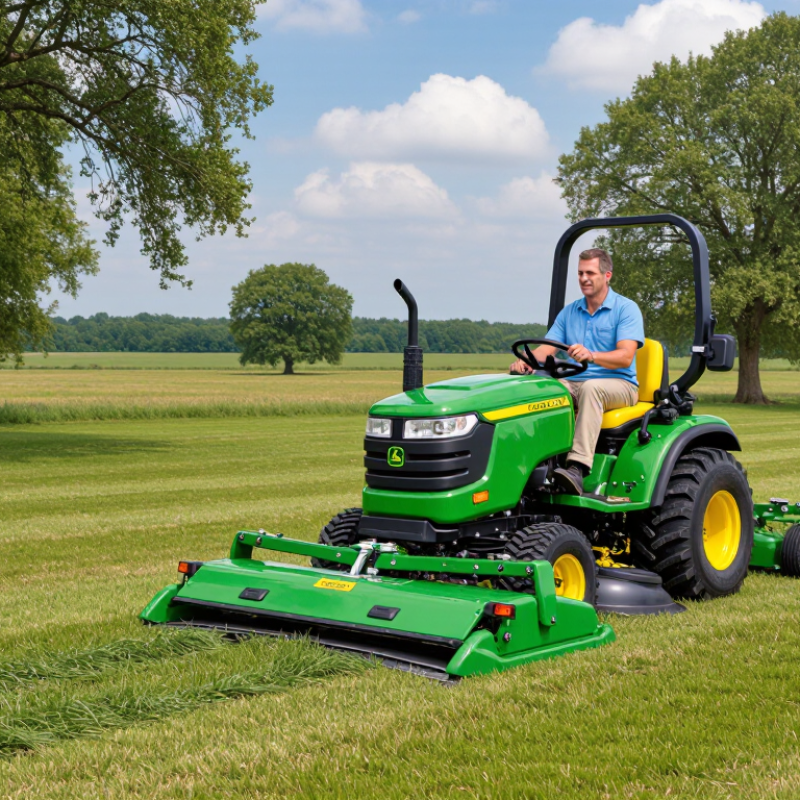
A lawn mower tractor is a sit-down machine built to cut grass over a relatively large area. The operator steers from a seat, while a rotating blade deck beneath the chassis trims the lawn. The engine usually provides power for both movement and cutting, though the design varies by model. Many have a steering wheel and forward-and-reverse pedals, giving them a familiar, tractor-like layout. That distinction matters. A riding mower is a broader category, while “lawn mower tractor” often describes a machine suited to longer mowing sessions or optional yard attachments.
On a typical property, the deck passes over grass while the tires carry the machine across the ground. Some tractors can tow small carts or other compatible equipment, but cutting remains their main job. They are not ideal for every yard: narrow gates, steep slopes, wet ground, and tight garden beds can make operation awkward. Measure access points and consider the terrain before choosing one. Check the blade area for packed clippings after use, and keep the tires properly inflated. The name is not perfectly consistent across sellers, either. Compare deck size, controls, and intended use rather than relying on the label alone. A larger machine can save time, but it still needs room to turn.
Why Choose a Lawn Mower Tractor?
How Does a Lawn Mower Tractor Work?
A lawn mower tractor routes engine power along two paths. One drives the rear wheels through a transmission; the other spins the cutting blades beneath the deck. In hydrostatic models, a pump moves hydraulic fluid to a motor, and the foot pedal adjusts travel speed. A belt and blade spindles turn engine rotation into the fast, even sweep that cuts grass. The steering wheel guides the front wheels, while the deck’s height setting controls how much grass each pass removes. The mechanism is simple in principle, but belts, blades, and moving parts need regular inspection.
A peer-reviewed analysis of U.S. Consumer Product Safety Commission surveillance data estimated 253,000 emergency department-treated lawn mower injuries in the United States from 2006 through 2013. That figure covers different mower types, not tractors alone. Still, it shows why understanding controls matters. Many riding models use seat or blade interlocks, but features vary. Never assume a safety switch replaces careful operation.
Tips: Before starting, check the tire pressure, clear sticks and stones, and confirm the deck is disengaged. Keep both feet on the platform and slow down before turning. Slopes can feel deceptively gentle; check the manual’s limits. Even experienced operators can misjudge a wet patch.
| System or Factor | How It Works | Typical Details | Why It Matters | Practical Consideration |
|---|---|---|---|---|
| Power source | An engine or electric motor supplies power for travel and, depending on the design, the cutting blades. | Many lawn tractors use gasoline engines; battery-powered versions are also available. | Riding reduces the physical effort needed to mow a large lawn. | Choose a power source based on lawn size, available charging or fuel facilities, and maintenance preferences. |
| Transmission and drive | The transmission transfers power to the wheels and lets the operator control forward and reverse movement. | Common designs include hydrostatic transmissions and geared transmissions. | Drive control affects how smoothly the tractor starts, changes speed, and maneuvers. | Hydrostatic controls often allow speed changes without manually shifting gears; operating methods vary by model. |
| Cutting deck and blades | Rotating blades beneath the deck cut grass as the tractor moves across the lawn. | Deck width varies by model; consumer lawn-tractor decks commonly fall around 38–54 inches. | A wider deck can cover more ground per pass but may be harder to fit through narrow gates or around obstacles. | Measure gates, storage access, and tight areas before choosing a deck width. |
| Blade engagement | A control engages or disengages the blade drive, which is commonly powered through a belt or an electric system. | Controls and drive arrangements differ among models. | Disengaging the blades allows the tractor to travel without cutting. | Follow the operator’s manual for safe engagement, stopping, and maintenance procedures. |
| Grass handling | The deck can direct clippings out through a discharge chute, return them to the lawn as mulch, or send them to a collection bag. | Available options depend on the deck and any compatible attachments. | Different methods suit different preferences and grass conditions. | Mulching works best when grass is not excessively long or wet; bagging requires emptying the collector. |
| Steering and turning | The steering wheel turns the front wheels to guide the tractor through the yard. | A conventional lawn tractor generally needs room to turn around landscaping and other obstacles. | Turning space affects mowing time and how closely the machine can work around trees and beds. | For yards with many tight turns, compare maneuverability and turning clearance before buying. |
| Safety systems | Many models use operator-presence controls and other interlocks to stop or disable the blades in specified conditions. | Safety features and their operation vary by machine. | Interlocks help reduce risk but do not replace careful operation. | Read the manual, keep bystanders clear, and never bypass safety devices. |
| Best fit for a lawn | A riding tractor is driven across the lawn while its deck cuts the grass in overlapping passes. | It is generally most useful where there is enough open area for riding and turning. | It can save time and effort compared with walking behind a mower on a larger, mowable property. | Consider lawn area, slope, obstacles, storage space, and the manufacturer’s limits for terrain and attachments. |
A lawn mower tractor earns its place when mowing is only part of the yard work. Its wide cutting deck can cover open grass efficiently, while a comfortable seat helps during longer sessions. On a mostly level lawn, it can also tow a small cart carrying mulch, hand tools, or fallen branches. The work is practical, not effortless: tight garden beds and narrow gates still need a smaller mower or hand tools.
With suitable attachments, a tractor may collect leaves, spread lawn materials, or help move light equipment around the property. A rear bagger is useful in autumn, though wet leaves can clog it and add frequent emptying stops. Some setups can handle light snow removal, but capability depends on the machine, attachment, and surface. Hauling can also be slower than expected. I learned that the hard way.
Tips: Check the manual. Match attachments to the tractor’s rated capacity, and inspect tire pressure and blades before work. Keep clear of slopes, hidden rocks, and people nearby. Small details matter. A quick walk over the lawn can prevent a rough cut or an avoidable stop.
Ratings are a general 1–5 suitability guide, not measured performance data. Actual capabilities depend on the tractor model, terrain, and compatible attachments. For example, baggers, carts, and snow equipment may be sold separately.
A lawn mower tractor earns its place when pushing a walk-behind mower turns a simple chore into a long, tiring job. The seat reduces repeated walking, while a wider cutting deck covers more ground with each pass. Nebraska Extension’s standard field-capacity equation estimates acres cut per hour from deck width, travel speed, and field efficiency. For example, a 42-inch deck moving at 4 mph, with efficiency set at 70 percent, covers about 1.2 acres per hour. That is an estimate, not a promise; trees, slopes, and overlapping turns slow real mowing. Still, fewer passes can mean less time and effort. Less strain.
A tractor also makes sense when you regularly tow a small lawn cart or collect leaves with compatible attachments. Check the terrain before buying: steep banks, tight gates, and crowded garden beds can make a large machine awkward. A smaller mower may fit better. And the tractor needs storage, maintenance, and room to turn. I would not choose one just because the yard looks large on a property map. Measure the mowable area, note obstacles, and compare the machine’s cutting width and turning radius. The capacity calculation helps, but it assumes steady conditions. Real yards rarely cooperate.
Start with the ground you actually mow. Measure the grass, not the whole property: trees, slopes, gates, and garden beds reduce usable space. A wide cutting deck covers open lawn faster, but it can struggle around tight corners. Check the narrowest gate and your storage-space clearance before buying. Small detail. Big frustration if missed. For uneven ground, compare tire grip, steering control, and the manufacturer’s slope guidance; never assume a heavier tractor is automatically safer.
Match the machine to the work, not just its horsepower. The U.S. Environmental Protection Agency’s nonroad spark-ignition engine standards cover engines below 19 kW (25 hp), but that threshold is not a measure of cutting performance. Compare deck width, transmission type, turning radius, and whether the mower can handle bagging or mulching. Check fuel use and service intervals, too. A tractor that sits waiting for a special part is no bargain. NIOSH recommends rollover protective structures and seat belts on riding mowers where available, so ask about these features if your terrain is sloped. I would still walk the property first; a quick test drive cannot reveal every rut or low branch.
The engine sends power to the rear wheels and the cutting blades. A belt spins the blades beneath the deck. The deck height controls how much grass each pass removes.
Check tire pressure, clear sticks and stones, and make sure the deck is disengaged. Keep both feet on the platform. Slow down before turning. Small habits matter.
Often, yes. A 42-inch deck traveling at 4 mph may cut about 1.2 acres per hour under favorable conditions. Trees, slopes, and overlapping turns reduce that estimate. Real yards are less tidy.
Consider the mowable grass, not the full property size. Measure around trees, garden beds, and other obstacles. A large machine can feel awkward in a small, crowded yard.
A wider deck covers open lawn faster, but may not fit narrow gates or tight corners. Measure gates and storage clearance before buying. Easy to overlook.
Slopes can be deceptive, especially when the grass is wet. Check the mower’s manual for slope limits and look for available rollover protection and a seat belt. A careful walk first helps, but it cannot reveal every rut.
Inspect belts, blades, and moving parts regularly. Check service intervals and fuel use before choosing a machine. A mower waiting for a special part can become an expensive inconvenience.
Some models work with compatible carts or leaf-collecting attachments. Confirm compatibility before buying. Also consider turning space and storage; the extra equipment needs somewhere to go.
A Lawn Mower Tractor is a ride-on machine designed to make mowing larger lawns more comfortable and efficient than using a walk-behind mower. It typically uses an engine to power both its movement and a cutting deck beneath the machine. The operator steers from the seat, adjusts the cutting height, and guides the tractor across the lawn, while the blades trim the grass and the clippings are discharged, collected, or mulched, depending on the setup.
Beyond routine mowing, some models can help with light yard tasks when equipped with suitable attachments. Their main advantages include reduced physical effort, faster coverage of broad areas, and a more comfortable mowing experience. To choose one, consider the size and layout of your lawn, its slopes and obstacles, the cutting width and maneuverability you need, available storage space, maintenance requirements, and your budget. Matching these factors to your property and regular tasks can help you select a practical, dependable machine.
